Puppy’s First Vet Visit: Essential Guide & Checklist for New Pet Parents
Prepare for your puppy’s first vet visit with this checklist vaccinations, questions to ask, and tips to keep your new pet healthy and happy

5 Min Read
28 Aug, 2025
Social share
Or copy link
https://www.happypet.care/media/guides/vets/checklist-for-puppys-first-vet-visit
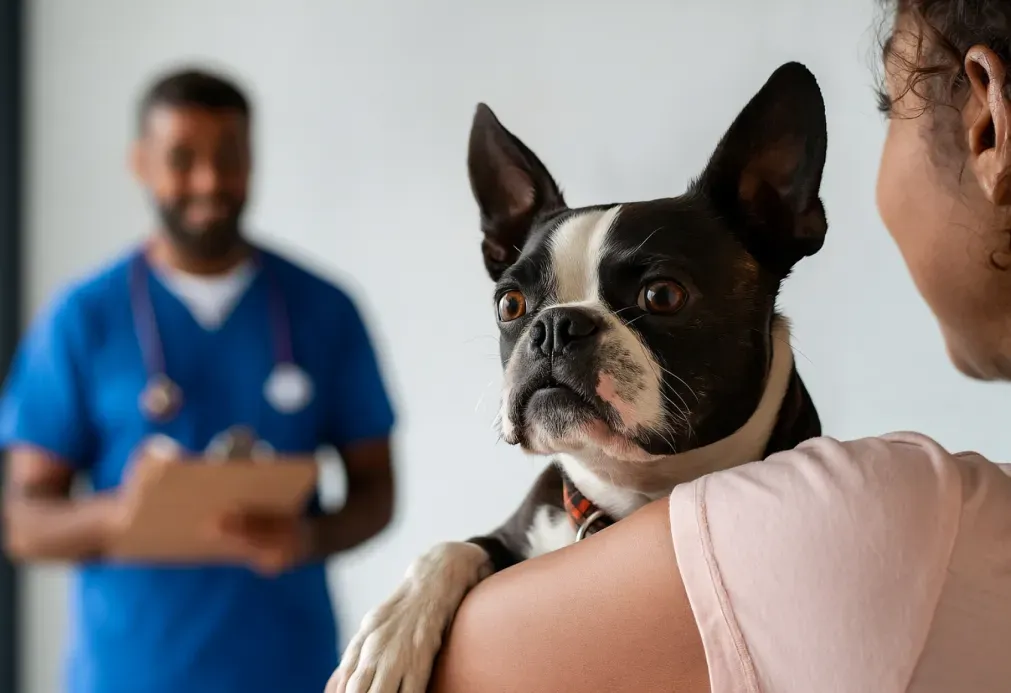
If you are here reading this article, then you have either brought home a new bundle of joy or are going to very soon.
So yaaaay - Congratulations!
Bringing home a new puppy is a moment of pure joy (and chaos - but the good types). The little yips, the tiny licks, the big yawns, and best of all - the warm cuddles—it’s an experience to be cherished. Alongside that excitement comes a lot of responsibility. You are now the primary caretaker for this tiny life. One of the very first, and most crucial, steps on this journey is your puppy’s first visit to the veterinarian.
For many new pet parents, this phase and the thought of taking a tiny one to the vet can be scary. What can I expect? What do I need to bring along? What is the list of important questions that I should ask in case the doctor is not very chatty?
Don’t worry. The Happy Pet puppy guide is here for just this situation, ensuring you and your new family member start your life together with the right prep.
Part 1: Before the Visit – Preparation is Key
The ideal time for a first visit to the vet is usually between 6 to 8 weeks of age. A smooth visit to the vet begins at home. A little background reading and preparation can make the experience stress-free for both of you.
1. Find the Right Vet - for you:
You shouldn't have to visit multiple different vets throughout the life of your pet. Your veterinarian should be your partner in your pet’s health, right through.
Look for a clinic that is close by, clean, has friendly staff, and is preferably recommended by someone you trust. You can always ask for suggestions from other pet parents in your locality or apartment complex or use a platform like www.happypet.care to discover trusted veterinary clinics in your city, be it Bangalore, Pune, Delhi, or Chennai.
2. Scheduling the Appointment:
When you call to book, let them know this is your puppy’s very first visit. Mention your puppy's age and breed (or your best guess if you don't have the information).
3. The "What to Carry" Checklist:
- Your Puppy (in a carrier): For the safety of your puppy and the other animals at the reception, it is recommended not to carry your puppy in your arms. A good and well-ventilated carrier is a must.
- Existing Pet Records (if any are available): If you got your puppy from a breeder or a shelter, remember to take any documents they provided regarding vaccinations or deworming.
- List of Questions: Most likely, you will forget all the questions you had thought of. Write down all your questions before you leave. Or you could just use the list we have created for you below.
- Treats: Carry some of your puppy’s favourite treats to create a positive association with the vet clinic.
Part 2: During the Visit – What to Expect
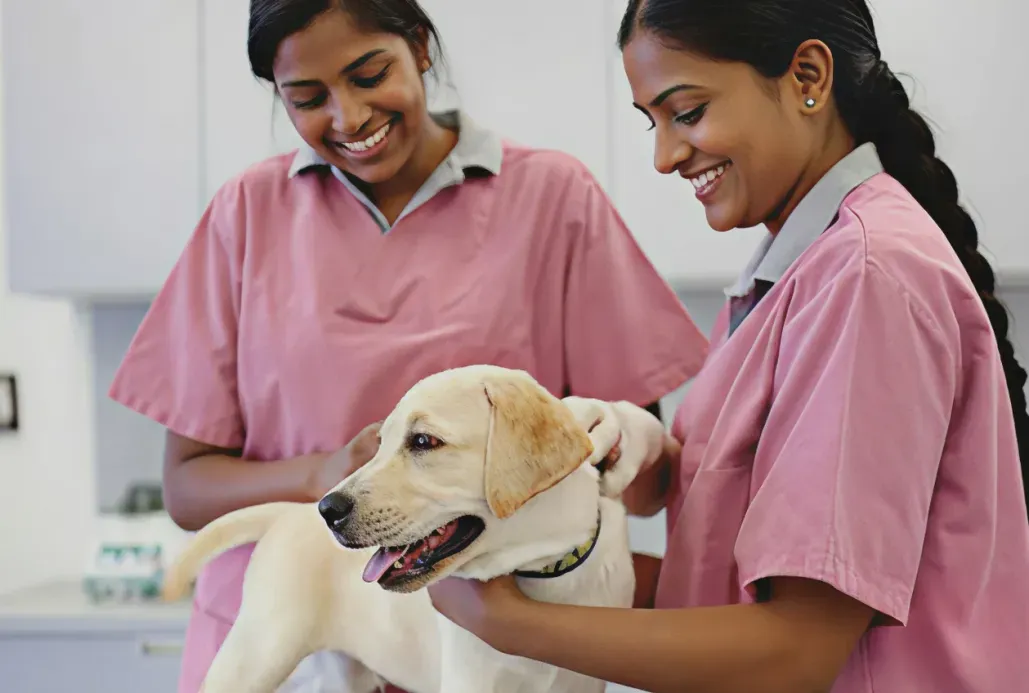
- Weight Check: The appointment will start with recording the weight of your puppy. This baseline weight will be the means to track their growth and for calculating dosages for any medications.
- Physical Exam: The vet will perform a thorough physical nose-to-tail examination. They will check your puppy’s eyes, ears, teeth, and gums; listen to their heart and lungs; feel their abdomen and joints; and check their skin and coat for any issues.
- Core Vaccinations: In India, a puppy's vaccination schedule typically protects against Distemper, Hepatitis, Parvovirus, Parainfluenza, and Leptospirosis (DHPPiL). The Anti-Rabies vaccine is also mandatory and usually given after 3 months of age. Your vet should give you a full schedule for the same. The Happy Pet Care mobile also has you covered with the checklist.
- Deworming: Your vet will administer or prescribe medication to eliminate common worms.
- The “Do you have any questions?” Discussion: This is your time. If you think you haven't got all your answers about diet and nutrition (what to feed and how often), house-training, and the importance of socialization, ensure that you ask till you are satisfied.
Part 3: Questions Every New Pet Parent Should Ask
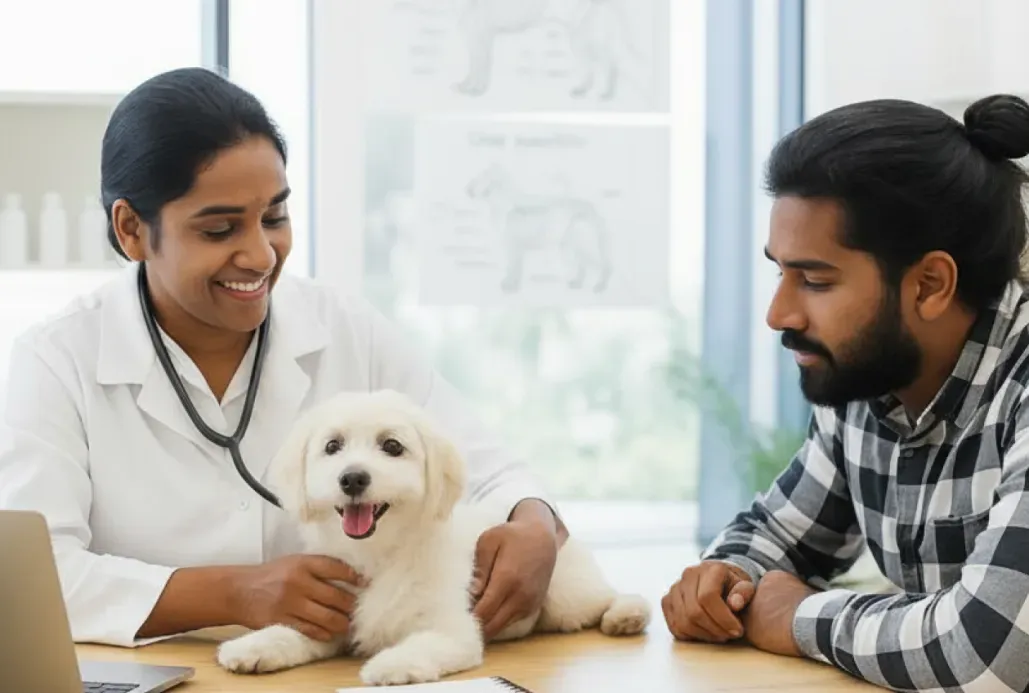
Your vet is there to help. Here are some essential questions to have on your list:
- Diet: What brand and type of food is recommended? How much should I be feeding my puppy and how many times a day?
- Health: What are some common health signs I should watch out for in a breed like mine (e.g., an Indie,a Shi Tzu, or a Golden Retriever)?
- Vaccinations: What is the complete vaccination schedule for the coming months?
- Training: When can I start basic command training? Do you have any recommendations for local trainers?
- Spaying/Neutering: What are the benefits of spaying/neutering, and at what age do you recommend it?
- Emergencies: What is your procedure for after-hours emergencies?
Congratulations! If you followed all the directions above, you should have been able to complete your puppy’s first vet visit. Before you leave, though, make sure to schedule the next appointment for booster shots.
Once home, keep a close watch on your puppy. It's normal for them to be a little tired or sore at the place of the injection. However, if you notice any serious symptoms like vomiting or swelling, call your vet immediately.
This first vet visit isn't just an appointment; it's the foundation of a lifetime of health and happiness for your new best friend.
Conclusion
Keep your pup’s health records safe! While some use files, digital is smarter. With the Happy Pet App, store all your vaccination & medical records on your phone—ready anytime at the vet, groomer, or boarding facility.
written by
Thammu AiyappaAuthor