Ear Mites in Cats: Signs, Treatment & Vet Visit Guide
Learn the signs of ear mites in cats, home remedies that help, when to visit the vet, and how to clean and protect your cat’s ears from future infestations.

5 Min Read
28 Jul, 2025
Social share
Or copy link
https://www.happypet.care/media/guides/vets/ear-mites-in-cats-signs-treatment-vet-visit-guide
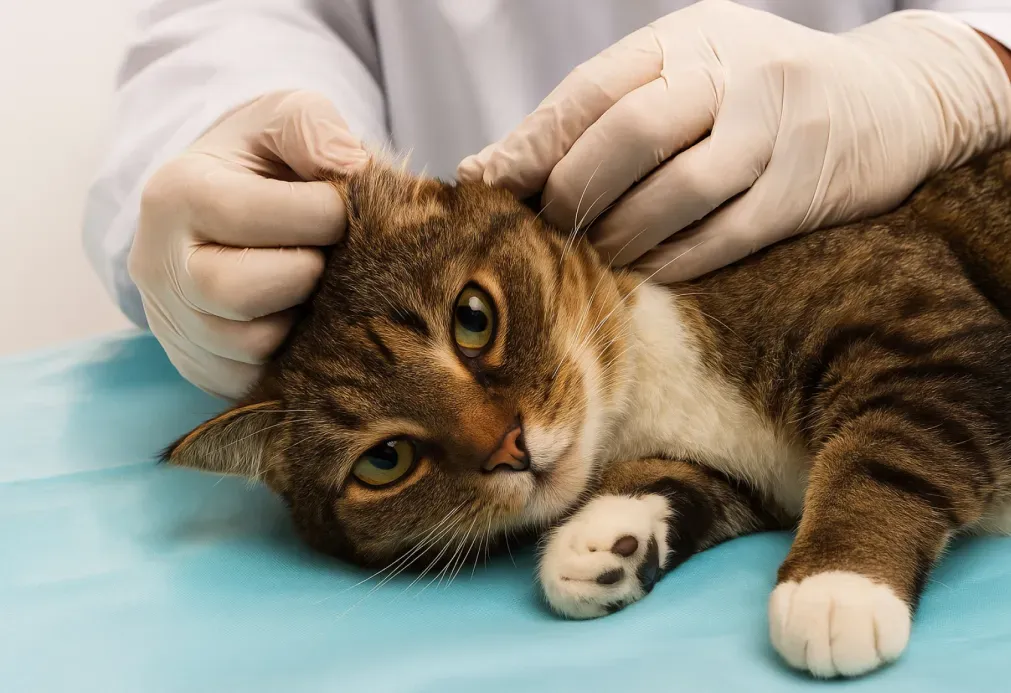
You see your cat scratching their ears nonstop? They shake their heads like crazy? The culprits behind these are most probably tiny ear mites in cats, which might be driving them nuts.
These microscopic bugs crawl around in your cat's ears and make them miserable.
This guide shows you what signs to watch for, how you can help at home, and what your vet will do to treat it.
The sooner you act, the sooner your cat starts to feel better. If your cat's ears itch like crazy right now, we'll figure out how to give them relief.
What Are Ear Mites in Cats?
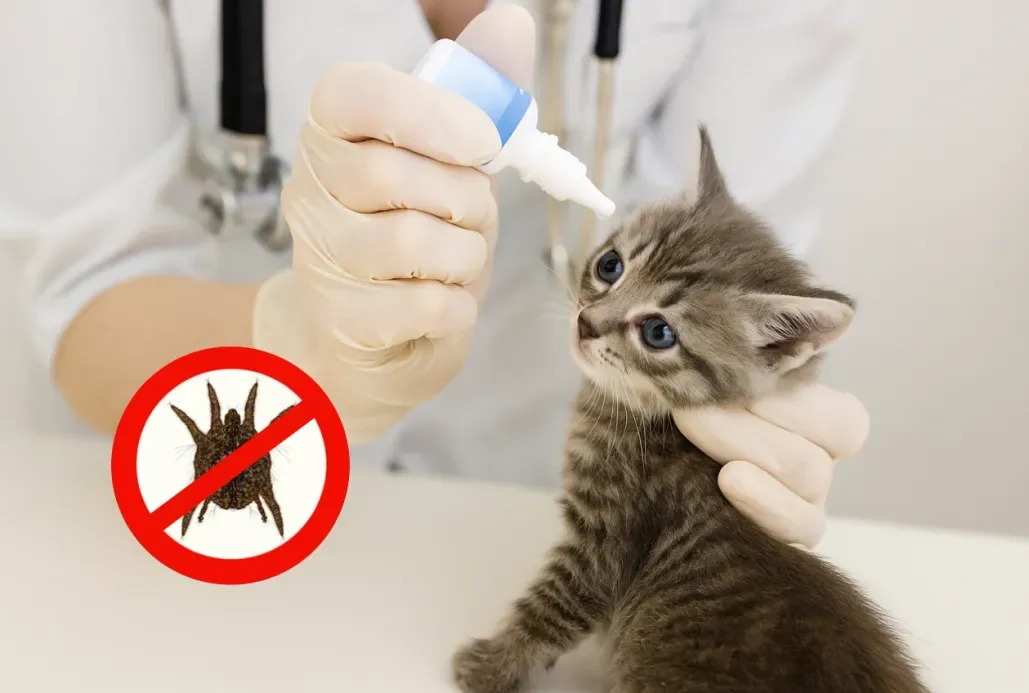
Your cat's ears shouldn't house unwanted guests, but tiny bugs called ear mites sometimes move in anyway. These little troublemaking microscopic parasites, scientifically known as Otodectes cynotis, feast on ear oils and wax.
Watch your cats closely. Do they shake their heads constantly? Do they scratch their ears until you worry they'll hurt themself? These mites in cat drive them crazy with itching and pain.
If you wait too long, those tender ears become red, swollen, and infected, which no cat parent wants their beloved cat to suffer.
These mites don't stay put either. They hop from cat to cat faster than you'd think. Multiple cats are prone to share these visitors quickly. Even dogs or ferrets can catch them.
Immature immune systems and close contact with littermates are the major reasons that lead to ear mites in a kitten, making them particularly susceptible.
But the good news is, if you catch this early, you can stop your cat's misery quickly while protecting every other furry family member.
How to Spot Ear Mites in Cats Early
If you suspect your cat’s ears may be infested with mites, here's what you need to watch for and confirm:
- Your cat scratches their ears way more than normal.
- They shake their heads over and over.
- You'll see dark, crumbly stuff in their ears that looks like coffee grounds.
- (That's actually wax, dried blood, and mite waste mixed together.)
- Look for red, swollen ears or open sores.
- You might notice scabs where they've scratched too much.
- Your normally sweet cat gets cranky when you touch their head.
It’s good to remember that other ear problems cause these same signs. Yeast infections and bacterial infections look similar. That's why you need your vet to check them out.
The American Veterinary Medical Association says ear mites are one of the top ear problems in young cats. Kittens get hit especially hard.
So, trust your instincts. When something seems wrong with your cat, don't wait. Get them to the vet. Your furry friend depends on you to notice when they're uncomfortable and get them the help they need fast.
Can You Try Ear Mites in Cat Treatment at Home?
Do you spot ear mites early? You can help your cat at home. But talk to your vet first. Always do this.
Start easy.
- Take a soft cloth and gently wipe your cat's ears.
- Buy and use cat ear mite drops made just for cats. (Pick a brand you trust.)
While using cat ear mites drop may seem like a quick fix, don’t skip a proper care plan. During seasonal changes, you can also explore ways to support your cat’s immunity, like using these pet supplements to help during winter & monsoon.
Try avoiding home fixes you see online, like oils, garlic, and hydrogen peroxide. Do not use them as they may possibly harm your cat. In some cases, they even make things much worse, while in some cases, they cause damage that never goes away.
Even after a few days of your home remedy, if you find your cat scratching or the signs look bad, don't wait anymore. The store drops we thought might work could have just not. This happens a lot with tiny kittens and badly infected cases, too.
So call your vet right now. Your cat needs comfort more than anything else in the world.
What Happens at the Vet for Ear Mites in Cats?
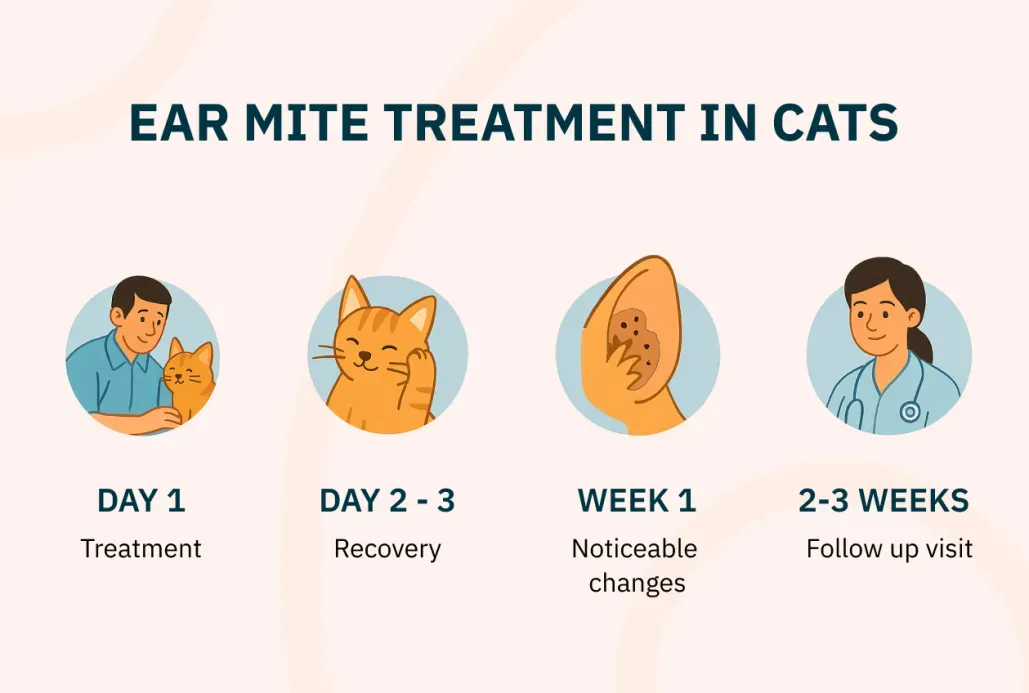
Ear mites in cats cause real discomfort for them, but your vet can fix this problem quickly.
At your appointment, your vet will examine your cat's ears carefully.
They'll use a cotton swab to collect some of that dark, crusty stuff you've been seeing. Next, they'll check this sample under a microscope to confirm if the ear mites in cat are definitely the culprit.
When they confirm ear mites, treatment begins right away.
- Your vet will give you medicated ear drops that kill these tiny pests.
- For serious infections, they might prescribe oral medication too.
- They'll also clean your cat's ears thoroughly so the medicine penetrates better.
Your cat will feel relief within days. The constant scratching will decrease, and they'll seem much happier. Full recovery takes two to three weeks.
That’s why routine veterinary care is so important, as regular checkups keep pets healthy and help spot issues like ear mites before they escalate.
Your vet will schedule a follow-up visit. Please keep this appointment. Sometimes stubborn mites survive the initial treatment and multiply again.
Use every drop of medicine your vet gives you. Follow their instructions completely. This approach eliminates the mites permanently and prevents them from coming back.
How to Clean Your Cat’s Ears Safely at Home
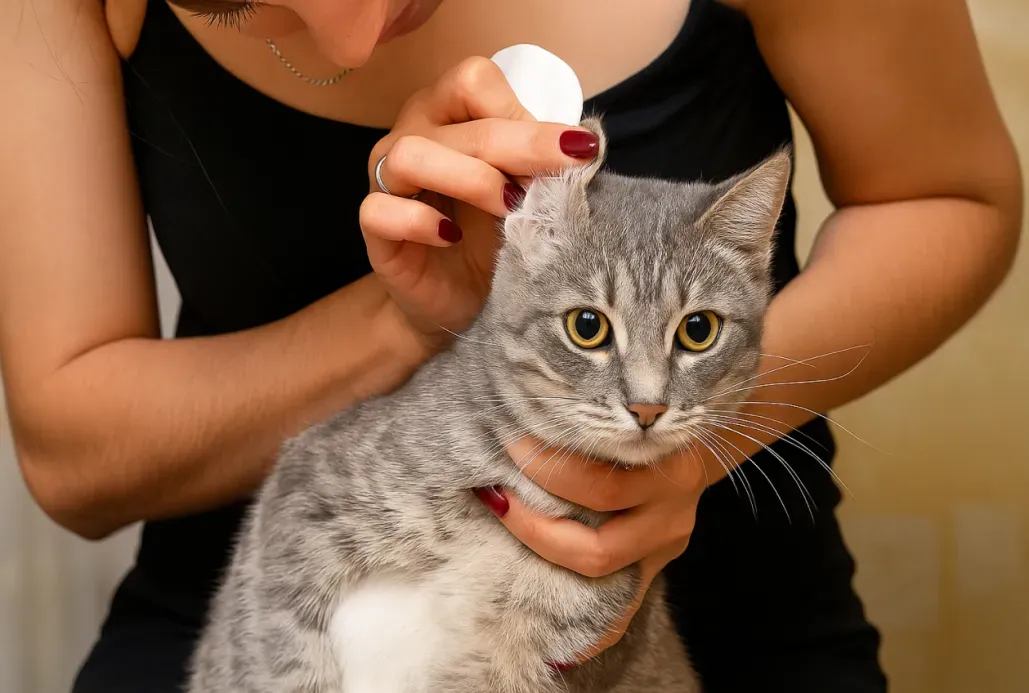
Your kitty's ears need gentle care when ear mites in cats move in. Clean ears help your cat feel so much better and bounce back faster. You can do this at home with just a few simple things.
Here's what you need:
Some soft cotton pads or clean gauze
- Cat ear mite drops (ask your vet which ones work best)
- A gentle ear cleaner made just for cats
- One fluffy towel
Here's how you do it:
Wrap your sweet cat in that towel like you're making the world's cutest burrito. This keeps your furry friend calm and still.
- Tip their little head gently and put in those ear drops exactly how your vet showed you.
- Give the bottom of their ear a soft rub for just a few seconds. This spreads those healing drops around.
- Take your cotton pad and wipe away any yucky stuff you can see. Never push anything down inside their ear, though.
And please skip the Q-tips completely - they can actually hurt your precious cat's delicate ears.
Take your time and be gentle. They'll thank you with purrs once those pesky mites are gone.
Preventing Ear Mites in Cats in the Future
A little care goes a long way.
- Brush your cat often and check their ears during cuddle time.
- Wash their bedding and clean litter boxes every few days.
- Use a vet-approved flea and mite treatment every month, even if your cat stays indoors.
Conclusion
Ear mites might be tiny, but they sure cause a lot of trouble. The best way to stop them is to catch the signs early, take your cat to the vet, and follow the full treatment. Never brush off an itch. If something feels off, check right away. A little extra care can keep your cat happy and itch-free.
written by
Happy Pet TeamAuthor