Could Your Dog Have Tetanus? What Every Pet Parent Must Know
Worried about stiff legs, lockjaw, or strange spasms in your dog? Learn what tetanus looks like, how vets treat it, and how you can protect your pet.

6 Min Read
04 Sept, 2025
Social share
Or copy link
https://www.happypet.care/media/guides/health/tetanus-in-dogs-causes-symptoms-treatment
As pet parents, one of our biggest worries is noticing even a tiny cut or scratch on our dogs. Most of the time, these small wounds heal quickly with a little cleaning and care. But sometimes, even a simple injury can lead to something more serious. One rare but dangerous condition linked to wounds is tetanus.
Tetanus happens when certain bacteria release a toxin that affects the nervous system. This can cause painful muscle stiffness and uncontrollable spasms.
The good news is that tetanus in dogs is uncommon, and with quick veterinary care, many dogs go on to recover completely. Still, knowing what tetanus is, how it develops, and the signs to look for will help you act fast if your dog is ever at risk.
In this guide, we’ll walk you through everything you should know about tetanus in dogs. Read on to figure out causes, symptoms, diagnosis, treatment, recovery, and, the best of all, prevention.
What Is Tetanus in Dogs?

Tetanus is a neurological disease caused by the bacterium Clostridium tetani. These bacteria are commonly found in soil and can enter the body through a wound, especially if it’s deep, dirty, or contains dead tissue. Once inside, they produce a toxin called tetanospasmin.
This toxin interferes with your dog’s nervous system by blocking the signals that normally relax muscles. Without those signals, muscles become locked in place, leading to stiffness, painful spasms, and exaggerated reactions to even small touches or noises.
Dogs are naturally more resistant to tetanus than people or horses, but when it does occur, it appears in two ways:
- Localized tetanus: only affects the area near the wound
- Generalized tetanus: spreads throughout the body and is more serious
How the Toxin Works
The tetanospasmin toxin is the main culprit. Once it attaches to the nerves, it:
- Blocks the release of “relaxing” chemicals (glycine and GABA)
- Keeps muscles rigid and causes repeated spasms
- Stays bound to nerves, which means symptoms last until new nerve endings grow—often several weeks
Symptoms of Tetanus in Dogs
Signs of tetanus often appear 5–10 days after an injury, though sometimes it takes longer.
Localized Tetanus
- Stiffness or rigid posture in the limb near the wound
- Muscle tremors and soreness in the affected area
- Limping or restricted movement
Generalized Tetanus
- Lockjaw (trismus): Dog can’t open its mouth properly, giving a “fixed grin” look
- Wrinkled forehead, erect ears, or a visible third eyelid
- Sawhorse stance: stiff, extended legs that don’t bend normally
- Painful spasms triggered by touch, sound, or light
- Drooling, fever, and hypersensitivity
- Trouble swallowing, eating, or even breathing in severe cases
- Advanced cases: inability to stand, pneumonia (from inhaling food or saliva), or heart rhythm issues
If you notice lockjaw, stiffness, or unexplained spasms in your dog, treat it as an emergency and call your vet immediately.
How Veterinarians Diagnose Tetanus in Dogs
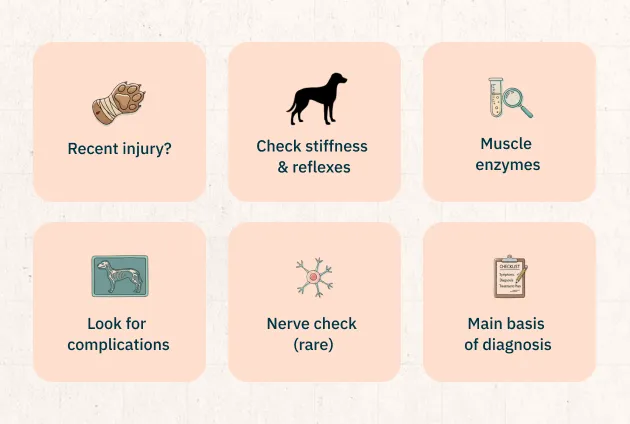
Tetanus can be tricky to diagnose because there isn’t a single test that confirms it. Instead, your vet will piece together the picture by:
- Asking about recent wounds, injuries, or surgeries
- Performing a full physical and neurological exam to check posture, stiffness, and reflexes
- Running blood tests, which may show higher muscle enzyme levels
- Taking X-rays to check for complications like pneumonia or megaesophagus
- In rare cases, using nerve tests (EMG) to confirm nerve dysfunction
Because the bacteria are very difficult to detect in the lab, vets mainly rely on your dog’s symptoms and medical history to make a diagnosis.
Treatment of Tetanus in Dogs
Pexels
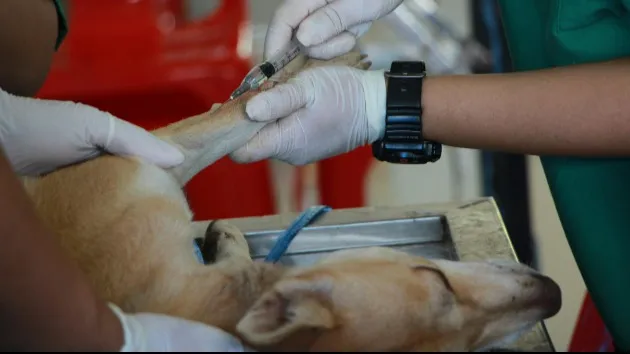
If your dog is diagnosed with tetanus, treatment usually means hospital care. The main goals are to stop the bacteria, ease the spasms, and support your dog while they heal.
Here’s what treatment often involves:
- Wound Cleaning & Debridement: Thoroughly cleaning the wound and removing any dead tissue to stop bacterial growth.
- Antibiotics: Metronidazole is the drug of choice; penicillin may be used in some cases, though it can sometimes worsen spasms.
- Tetanus Antitoxin: Can neutralize toxins that haven’t yet bound to nerves. It works best when given early but carries a risk of allergic reaction.
- Muscle Relaxants & Sedatives: Drugs like diazepam or acepromazine calm the dog and help reduce painful spasms.
- Supportive Care: IV fluids, oxygen if breathing is affected, syringe feeding or feeding tubes if swallowing is difficult, and keeping the dog in a quiet, low-stimulation environment.
- Pain Relief: Carefully managed medications to keep the dog comfortable.
- Monitoring: Close observation for complications such as pneumonia or urinary infections. Gentle physiotherapy may also be recommended to prevent joints from becoming too stiff.
Tetanus treatment can feel overwhelming, but with expert care and a calm environment, many dogs recover well.
Recovery and Management of Tetanus in Dogs
Timeline
Recovery doesn’t happen right away. In fact, symptoms often get worse before they get better. With treatment, you may see progress within 5–12 days, but full recovery usually takes 4–6 weeks.
Prognosis
- Localized tetanus: Most dogs recover fully, with survival close to 100% when treated.
- Generalized tetanus: The outcome depends on severity. Survival rates range from 50–92%, with dogs who can still stand and walk having the best chance.
Possible Long-Term Complications
Even after recovery, some dogs may deal with short-term effects like:
- Stiffness or odd posture lasting several weeks
- Twitching or unusual movements during sleep (usually temporary)
- Facial paralysis or swallowing difficulties that improve with time
- Breathing issues if pneumonia develops
- Digestive problems such as constipation or, rarely, megaesophagus
- Muscle loss after long illness
- Heart rhythm changes or urinary difficulties
With regular check-ups, most of these problems can be managed, and most dogs eventually return to normal.
Prevention Tips
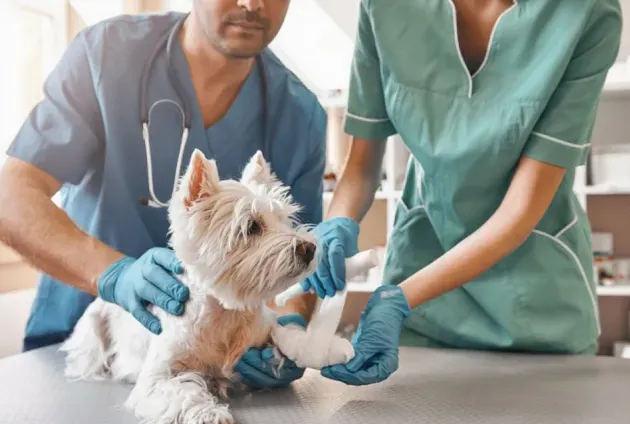
- Always clean wounds promptly, no matter how small
- Take your dog to the vet if the wound is deep or dirty
- Keep your dog’s environment safe and free from sharp or contaminated objects
Dogs generally don’t receive tetanus vaccinations like humans do, as they are naturally more resistant. Good wound care is your best line of defense.
Tetanus in dogs is rare, but it’s serious and should never be ignored. Knowing the warning signs—such as lockjaw, stiff legs, or sudden muscle spasms—can help you act quickly. With prompt veterinary care, including antibiotics, wound cleaning, and supportive nursing, many dogs recover well, though it can take weeks.
Tetanus in Dogs FAQs
Can tetanus kill dogs?
Yes. Severe tetanus can be fatal if not treated, often due to breathing difficulties, pneumonia, or heart problems.
Is tetanus contagious to other pets?
No. Tetanus does not spread between pets. It only develops if a wound is contaminated by bacteria.
Is tetanus contagious to humans?
No. Dogs with tetanus don’t pose a risk to humans. People develop tetanus only if their own wounds are contaminated.
Do dogs need tetanus shots?
No. Unlike humans, dogs don’t usually get tetanus vaccines. They are naturally more resistant, and prevention relies on wound care and monitoring.
Conclusion
The best protection is prevention: clean wounds right away and seek veterinary care if anything looks unusual. A little caution can go a long way in keeping your dog safe. If your dog shows any signs of tetanus, contact your veterinarian immediately. Early treatment can save lives.
written by
Neha MridulAuthor