Pet Mental Health: Why Emotional Wellbeing Matters Today
Pets feel stress, anxiety, and sadness too. Their mental health matters spot the signs early before they become serious.

5 Min Read
02 Jul, 2025
Social share
Or copy link
https://www.happypet.care/media/blogs/parenting/pet-mental-health-emotional-wellbeing-guide

We’re Finally Talking About It: Pet Mental Health Is Real
Just a few years ago, discussing pet mental health was... unnecessary. The attitude was: “They are animals, and they will get over it.”
Now? Not anymore.
The numbers speak volumes: More than 75 % of dogs will experience anxiety or depression at some point. Also, over 79% of pet parents say that their pets have a positive impact on their own mental health.
That is a two-way relationship. And so it is time we realise that stress, loneliness, and emotional unease afflict pets as well, and in a way that we too often overlook.
But Why Do Pets Get Mentally Unwell?
Simple enough. Pets feel. They do not simply react.
This is supported by science. An example is the structure of the brain of dogs, which is similar to ours in terms of emotional processing. They are affected by tone, touch, and room energy. They read on absence, loss, and abrupt shifts of environment.
And they do mourn. They become frightened. They become bored. And all that mounts up unless we put our foot down.
What Dog Mental Problems Actually Look Like?
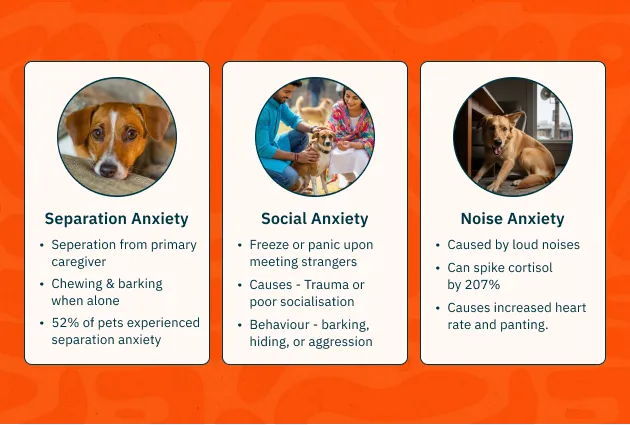
1. Separation Anxiety
According to Pet Owners Survey report from DVM 360, 52% of dog owners witnessed separation anxiety & 42% noticed mental health issues.
When dogs chew, bark, or have accidents when you go away, they are not acting out; they are anxious. It is one of the most prevalent dog mental problems, and it runs deep.
2. Social Anxiety
Certain pets freeze or panic when facing strangers, new animals, or new places. It is not mere shyness; often, this is the reflection of trauma or poor socialisation in the past.
3. Noise Anxiety
Exposure of your pets to loud noises could lead to Noise anxiety. Continuous long exposure can spike cortisol by 207% which rapidly affects heart rate, panting, hiding & escaping attempts.
Pets can get into a panic over thunder or fireworks, or even the vacuum. Pacing, hiding, shaking- it is fear, not fuss. And it must be taken care of.
When It’s More Than Just a Mood: Pet Depression Is Real
Yes, depression is a part of pet mental health. It happens when your normally playful dog no longer gets off the couch, or when a cat goes days without eating, when there is no wag, no energy, just.. blank.
Possible triggers for Pet Depression
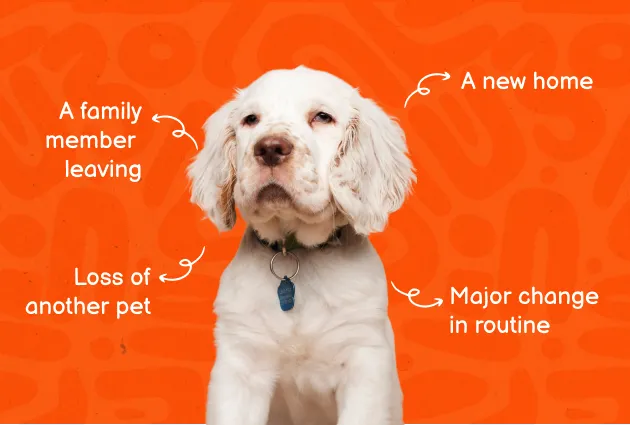
The symptoms are withdrawal, alterations in appetite, strange sleeping habits, and even violent outbursts. When your pet is simply not the same, then it is time to take it seriously.
Not Just Sad- Sometimes It’s Obsessive
Not all dog mental issues are mood-related. Have you ever seen a dog run around with its tail? Or lick a single paw until it’s raw?
These can be compulsive behaviour- in other words, pet OCD. It is known as Canine Compulsive Disorder (CCD), and it requires care, not just a scolding.
What Actually Helps: Dog Mental Health Therapy
Love is not always enough. And that is okay. This is where dog mental health therapy comes in. Qualified behaviourists are capable of creating behaviour modification strategies to allow your pet to reprogram triggers, decondition the fears, and substitute stress behaviours with safer ones. It is kind of similar to counselling, but with more treats and tail wags.
In more severe cases, vets might even suggest meds- yes, the same types used for human anxiety or depression (at safe pet dosages, of course).
But Did You Know Pets Can Also Be Therapists?
Mental health pet therapy is not just comfort; it is clinical.
- Pets reduce stress, increase happiness, and relieve anxiety, PTSD, or depression.
- Even petting a dog decreases cortisol.
- Therapy animals now support wellness in hospitals, schools, and even offices- because the calm they bring is real and measurable.
Warning Signs: How to Know If Your Pet Needs Help
Not all off-days point to trouble. Look out for these red flags:
- Aggression or hiding
- Appetite loss
- Excessive barking or chewing
- Sleep changes
- No interest in play or walks
Such behaviours can indicate a dog's mental problems or underlying upset feelings.
What You Can Do- Today
Start simple. Pets do not require any fancy repairs; all they need is routine, play, and care.
- Keep a routine - It makes pets feel secure.
- Exercise daily - It not only burns calories, but it also burns stress.
- Beat boredom - Change toys, experiment with puzzles, and occupy their brain.
- Trust your gut - When something does not seem right, seek dog mental health therapy.
Any behaviourist, trainer, or vet with experience in mental health pet therapy will be able to assess and guide you far better than any guesswork will ever do.
Let’s Not Forget Senior Pets - Care for Their Mental Health Too!

Older pets are susceptible to emotional degradation. Dog mental problems, such as cognitive dysfunction, are evidenced by confusion, night waking, in-home accidents, and forgetfulness.
You can not turn the clock backwards, but you can slow the decline:
- Keep them mentally stimulated
- Take shorter, more frequent walks
- Speak to a vet about supplements
- Create calm, safe spaces
Pet mental health in older pets is often overlooked- but it’s one of the most important areas of care.
Insights on Pet Mental Health: From Happy Pet Experts!
The space is rapidly changing.
Stress is now being tracked by wearable collars. Anxiety patterns can be identified with the help of pet cameras. Clinics are becoming “Fear Free” to minimise emotional trauma at the vet. Pet therapy for mental health is going mainstream- in schools, hospitals, and therapy programs. And as our understanding grows, so does the need for everyday pet parents to be part of the conversation.
Conclusion
Let’s be real- mental wellness is not confined to human beings. The calm, connected, curious pet is a pet that really thrives. And that is only possible when we are concerned about their emotional needs, which extend beyond the basics.
written by
Happy Pet TeamAuthor