
German Shepherd Training Tips | Don't Miss These
Discover best German Shepherd training tips on obedience, socialization, discipline, and behavior. Don't get it wrong and train your GSD properly.

5 Min Read
10 Nov, 2025
Social share
Or copy link
https://www.happypet.care/media/blogs/parenting/german-shepeherd-training-tips
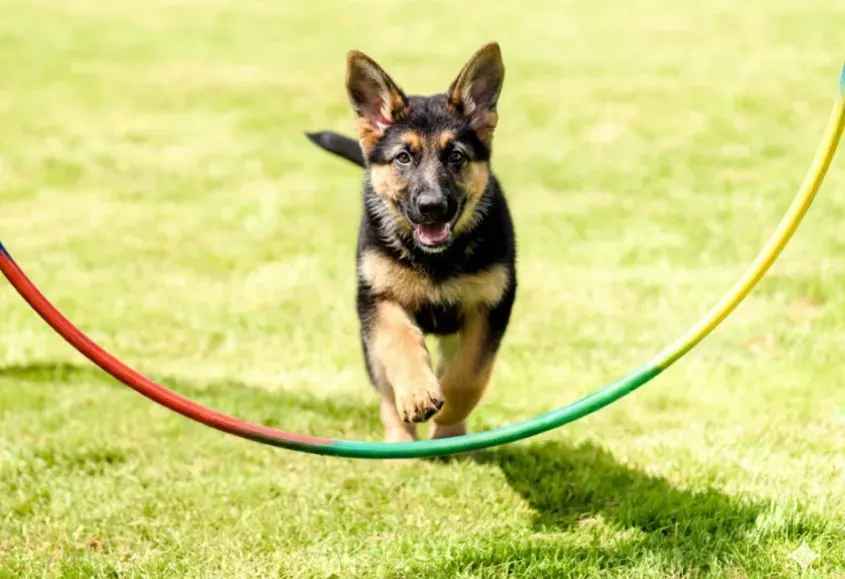
German Shepherds are among the most intelligent and loyal breed. They are intelligent, protective, and fantastic companions—either as family pets or guard animals. And their intelligence will also render them stubborn and strong-willed if not disciplined. That is why they need training.
Establishing your expectations up front will prevent you from having larger issues later on. German Shepherd training is most effective early and daily. Consistency is paramount. Be firm, but fair. Once your GSD understands boundaries, you’ll see a confident, obedient, and reliable companion by your side.
Core Training Techniques for German Shepherds
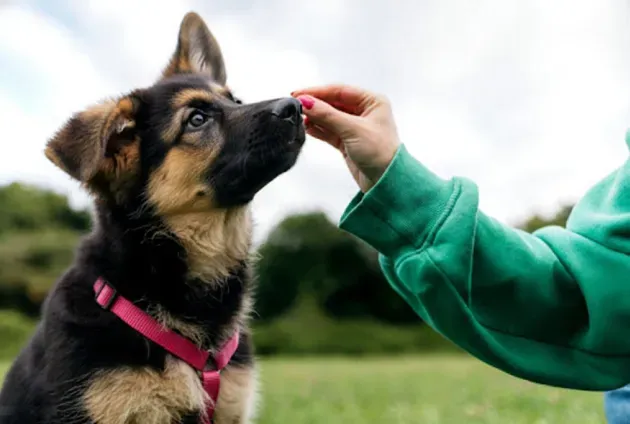
German Shepherd training doesn't have to be intimidating. It's all about structure, consistency, and employing the proper techniques from the very beginning. GSDs being intelligent and stubborn requires your approach to be in line with that. The following are the fundamentals of training methods that help establish discipline, trust, and good manners.
Positive Reinforcement for GSDs
The best way for German Shepherd training is through positive reinforcement for dogs - positively reinforcing desired behaviors to be repeated.
- Successful rewards are:
- Praise
- Small treats
- Toys
- Brief training sessions
- Happy, confident GSD learns faster than the fearful opposite.
- Forceful corrections such as yelling, hitting, or jerking on the leash can:
- Shatter trust
- Lead to aggression
- Create anxiety or nervous behaviors
- Have fun and remain interesting:
- Swap rewards (treats, toys, praise)
- Keep high variety to keep high motivation levels
- Reshape your relationship with positive interactions
Quick tip: Reward immediately after the desired behavior—timing is crucial when it comes to German Shepherd obedience training.
Crate Training & Leash Training Basics

A good German Shepherd puppy training book always includes crate and leash training. Both are handy for obedience and everyday life.
Crate Training
A crate is not punishment. Make it your dog's haven—a den where they can be alone. Crate training helps with housebreaking, prevents destructive chewing, and teaches independence. Make crate time positive by adding comfortable bedding and acceptable chew toys.
Leash Training:
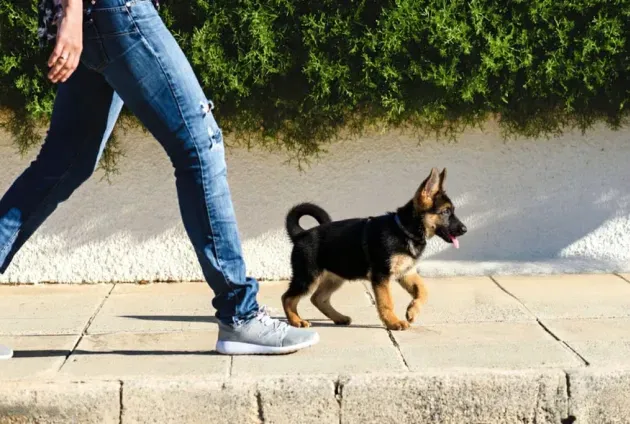
If not socialized to proper leash behavior early on, an older GSD will easily bully you. Begin with a good-fitting harness and very short practice sessions when young. Reward walking calmly beside you. With persistence, your dog will understand pulling accomplishes nothing, but loose-hip walking to you brings rewards.
Pro tip: Consistency matters. If you allow pulling sometimes but not others, your dog gets mixed signals. Stay firm and reward the behavior you want every single time.
Training Commands All German Shepherds Need
Teaching your GSD to respond to commands has nothing to do with obedience; it's about safety, discipline, and establishing trust. A trained German Shepherd is also attentive in every situation, making life easier for both of you. From obedience to off-leash control, here's what all GSDs need to know.
Basic Commands: Sit, Stay, Come, Heel
All German Shepherds need to know the fundamentals. These commands are useful for everyday life and can even stop accidents from occurring.
Why they are necessary:
- "Sit" trains calmness in hyper moments.
- "Stay" will prevent your GSD from running out into the street or chasing.
- "Safety" and "recall" require "Come."
- "Heel" instructs your dog to walk calmly beside you rather than pulling.
Successful training tips:
- Keep sessions brief (10–15 minutes in length).
- Practice commands daily.
- Reward with treats, praise, or a clicker.
- Train in varying situations to develop reliability.
Quick Tip: These basics need to be mastered before more advanced obedience and improved overall behavior can be taught.
Advanced Commands & Off-Leash Control
Once your GSD is comfortable with the fundamentals, advance to advanced training. Off-leash control is particularly crucial in guard dog training tips, working dogs, or even just having safe freedom outdoors.
How to progress to off-leash readiness:
- Begin recall training within a controlled or fenced-in area.
- Add distractions such as people, dogs, or sounds for focus testing.
- Gradually add distance with each successful reward.
What to do:
- Never rush—take your dog's pace.
- Utilize lengthy leads during initial stages for safety.
- Consistency and trust are more significant than speed.
Why it's worth it:
- The consistent off-leash GSD responds immediately even in distracting environments.
- Offers the bonus power role that accompanies off-leash training while providing your dog safe freedom.
Socialization & Behavioral Training

Socialization is as essential as obedience for German Shepherds. Socialization correctly socializes a GSD into a confident, calm, and well-adjusted dog. Without it, they turn into fearful aggression, over-protective, or anxious. This is how to do it right and address typical behavior problems.
Early Socialization of GSD Puppies
The top German Shepherd socialization tips is targeted towards the initial days (8–12 weeks). That is when your puppy is most receptive to new things.
What to expose your puppy to:
- Various people (children, adults, strangers)
- Other animals and friendly pets
- Background noises (doorbells, cars, vacuum cleaners)
- Variety of environments (parcs, bazaars, car rides)
Why it is important:
- Develops confidence away from home
- Prevents aggressiveness due to fear
- Decreases over-protectiveness in adulthood
- Develops a friendly but alert personality
Pro Tip: Keep all experiences positive with praise, treats, or play. Your puppy should learn that new things = good experiences.
Handling Common German Shepherd Behavior Problems: Barking, Guarding & Anxiety
German Shepherds are naturally protective guardians, and sometimes this side needs to be tempered. Training enables their protection instincts to come out in a healthy manner.
Excessive Barking
- Train a "quiet" command
- Reward the quiet immediately
- Don't scream—screaming is literally barking
Over-Guarding
- Train loose greetings when visitors arrive
- Reward relaxed, friendly behavior
- Let your GSD work for it; don't let him make decisions as to who is "safe"
Anxiety & Restlessness
- Meet daily German Shepherd exercise needs (60–90 minutes minimum)
- Use physical exercise with mental stimulation (puzzle toys, training exercises)
- A tired GSD is quieter, less destructive, and easier to handle
Tools & Tips That Boost Your Training Success
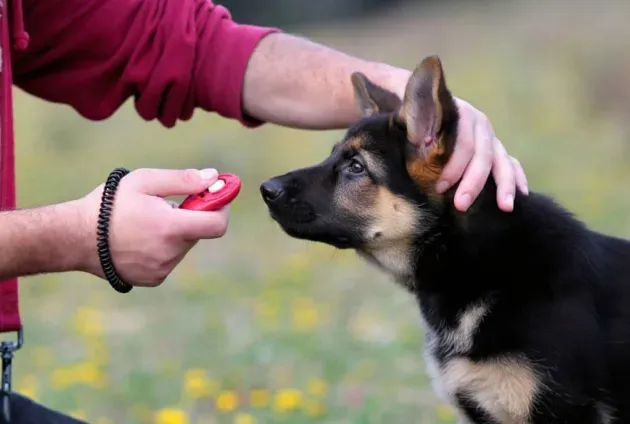
Training is simpler with the correct equipment and a professional method. The aim is to provide accurate, safe, and fun learning and the best way to train a German Shepherd puppy.
Top Training Equipment for German Shepherd Puppies
- Leash & Harness: Less restrictive control
- Clicker: Helps with rewarding at the exact moment
- Interactive Toys: Keep your GSD mentally stimulated and keen
- Treat Pouch: Keeps rewards at hand for training sessions
Steering Clear of Blunders: Harsh Behavior & Mixed Cues
The majority of GSD training mistakes to avoid are incoherence or violence.
- Use one word per command (i.e., always "down", never "lie down" occasionally)
- Avoid screaming, striking, and jerking on the leash—it shatters trust & develops German Shepherd behavior issues
- If considering how to punish a German Shepherd, do it with a clear head:
- Redirect to the proper behavior
- Reward when they get it right
- Make corrections brief and sweet
Reminder: Training is more about teaching than frightening.
Long-Term Training Advice: Sustaining Progress
Training doesn't end with the original training of your German Shepherd to obey. Sustaining skills in the long term is equally as significant as the original training.
How to Reinforce Training in the Long Term
- Practice on a daily basis—even brief 5-minute practice sessions
- Introduce challenges incrementally as your GSD develops:
- Long "stays"
- Recall in the presence of distractors
- Training near strangers or other animals
- Keep in mind: Training your mind as well as your body
When to Use a Professional Trainer
- Some issues require professional advice, particularly when training:
- Human or animal aggression
- Severe separation anxiety
- Cinching guard dog training tips for working GSDs
- What a professional can help you with:
- Fixing flaws in your training technique
- Elevated obedience or behavior refinement
- Teaching you the way to work with a stubborn working breed
- Seeking professional assistance in time places your GSD on the path to success in the future and maintains your relationship healthy.
Conclusion
Training a German Shepherd requires patience and perseverance. Employ positive reinforcement, do not use forceful techniques, and train every day. Your GSD will become your obedient, self-assured, and loyal buddy with the proper approach.
written by
Happy Pet TeamAuthor