Bulldog Temperament by Age: Puppy, Teen, Adult Phases Explained
Discover how a bulldog’s temperament evolves with age and learn expert tips to guide and shape their behavior at every life stage.

4 Min Read
23 Jun, 2025
Social share
Or copy link
https://www.happypet.care/media/blogs/parenting/bulldog-temperament-by-age-puppy-teen-adult-phases-explained

What Is the Temperament of a Bulldog Like?
Before we talk about puppies or adults, let’s understand the overall temperament of bulldog breeds.
Whether someone owns an English, American, or French bulldog, they are usually recognized for being:
- Loyal and affectionate with family
- Brave but not aggressive
- A bit lazy (yes, naps are their favorite)
- Stubborn at times
- Protective when they feel they need to be
But here’s the fun part — the temperament of a bulldog pup isn’t the same forever, as per the AKC. They go through many changes as they grow, and how you care for them matters a lot.
The Puppy Phase: When the Temperament of the Bulldog Starts to Show

Your bulldog is considered a puppy from the time it is born until it turns 6 months old. They truly are energetic and always eager to learn.
At this age:
- They have very sensitive ears and noses.
- They pick up new things very fast.
- They are still trying to make sense of the world.
The temperament of bulldog puppies is shaped most during this time. Show your pets lots of love, train them gently, and expose them to different people and situations, and they will learn how to be confident and behave properly. But you shouldn’t be surprised if they nibble, bounce, and run around in some silly manner!
Teenage Bulldogs: A Tricky Time in the Temperament of Bulldog
Young bulldogs, like human teens, can sometimes be very rebellious. At this stage, their personality is cemented in place.
During teenage years, the temperament of Bulldog teens may show:
- If they’re more stubborn, they might not do what you ask.
- Trying new ideas and taking risks
- Some mood changes
Many bulldog parents feel upset at this stage. Don’t be alarmed! There is absolutely nothing unusual about it.
Your bulldog is still trying to find where it fits into your family. Give your pet some peace, training, and rewards to manage this stage more easily. Using harsh discipline with bulldogs makes them uneasy and distant.
The Adult Phase: When the Temperament of the Bulldog Settles Down

Once your bulldog is about 2 or 3 years old, it grows into an adult. The good news is, drama no longer repeats itself.
The temperament of adult bulldogs is usually:
- More calm and stable
- Still loyal and protective
- A little lazy (nap time increases!)
- Very loving with kids and family
Bear in mind, every bulldog has its own personality. While English Bulldogs tend to be relaxed, American Bulldogs might have high energy and require a bigger play area.
The temperament of a bulldog at this stage depends a lot on how well they were trained and socialised earlier. As a result, the time we put in early really benefits us later.
What Affects the Temperament of a Bulldog?
Let’s see what makes your bulldog what they are.
1. Genes and Breed Types of Bull Dogs
Some bulldogs are naturally more lively or powerful than others. You can see this by the fact that American Bulldogs have more energy than English ones. As a result, their attitude will display this.
2. Training of A British Breed
The temperament of a bulldog improves a lot with good training. If you train your dog early and regularly, it will behave well and respond to instructions.
3. Socialization of Bulldog
When your bulldog is still a puppy, being introduced to unknown people, pets, and different sounds will make them feel more secure and approach people more easily later.
4. Daily Environment
Calm surroundings make bulldogs feel more secure. Shouting and a chaotic atmosphere can bring anxiety or aggression to pets. So the importance of nurture equals that of nature.
How to Train a Bulldog Based on Its Temperament?
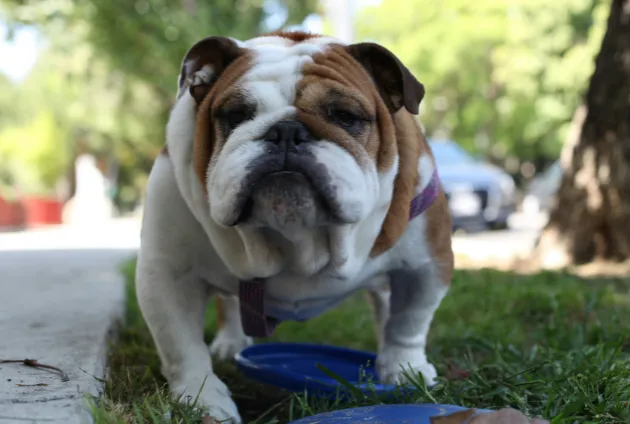
Training a bulldog is not the same as training a Labrador or a German Shepherd. Bulldogs… are different from other dogs. They are smart in many ways, but they can also be stubborn. They prefer to work at their own pace.
As recommended by PetMD’s positive-reinforcement training approach, reward-based learning works best with -
- Positive rewards (like treats and praise)
- Short and fun training sessions
- Lots of patience
Don’t yell at them, use punishments, or make them do things against their will. That just doesn’t work with the temperament of bulldog breeds. They will block you out or pretend not to see you. Rather, turn the training process into something fun. They will have fun and learn more quickly.
Why Socialization Is Key to the Temperament of the Bulldog?
Are you interested in a bulldog who is friendly and doesn’t bark at unfamiliar people or animals? Veterinarians from VCA Animal Hospitals emphasize early socialization. Make them involved in social activities from an early stage.
The temperament of bulldogs depends a lot on how much they’re exposed to different situations as puppies. Let your pets go to parks, hang out with other dogs, meet children (always under your eyes), and encourage friendly exploration.
Ignoring this step may result in your adult bulldog feeling over-protective or scared of things they haven’t seen before.
Keep in mind that a bulldog who is well socialized is happier.
Temperament of Bulldogs in Multi-Pet Homes
Being cautious during introductions is necessary if you plan to adopt a bulldog or already have one at home. From time to time, bulldogs may get protective about their toys or food.
How to manage the temperament of bulldogs in homes with other pets:
- Feed them separately
- Avoid competition for attention
- Supervise playtime
If you introduce them properly, bulldogs tend to get along well with other pets.
Expert View: What the Pros Say About the Temperament of the Bulldog
The American Kennel Club has the perfect way of saying it:
“Bulldogs are quiet, loving, and easy to get along with, always hoping to make their owner happy. Early socialisation is essential for every dog to get off to a good start.”
If you’re looking for a calm, faithful, and loving dog, a bulldog is the right choice. Keep in mind that their behaviour requires patience, work, and love.
Conclusion
Bulldogs may not be for everyone, but their loyalty, love, and charm win hearts. With care, patience, and training, they become lifelong companions full of warmth.
written by
Happy Pet TeamAuthor