Should You Shave Your Dog in Summer? Here's the Truth
Why shaving your dog in summer can do more harm than good and what to do instead

8 Min Read
16 Jun, 2026
Social share
Or copy link
https://www.happypet.care/media/blogs/parenting/biggest-summer-mistake-pet-parents-make
Every summer, I find myself having the same conversation again and again:
"Can you shave my dog? It's hot!"
And I completely understand the thought process. When we feel hot, we naturally assume that less hair means less heat.
But this is one of the biggest misconceptions many pet parents have during summer.
Why Shaving Your Dog Isn't the Solution
Zero trimming or shaving does not actually help cool your dog down. In many cases, it can do more harm than good.
Your dog's skin is the largest organ in their body, and their fur is much more than just "hair." It acts as a protective barrier against:
- Dirt and dust
- Allergens and pathogens
- UV rays
- Insect bites and parasites
- Environmental irritants
Most importantly, a dog's coat does not function like a winter jacket.
Think of it as an adaptive insulation system.
It helps keep dogs warm during winter while also insulating them from excessive heat during summer. Their coat creates a protective layer between the skin and the environment, helping regulate temperature and shield them from harsh weather conditions.
Why Double-Coated Dogs Should Not Be Shaved
For double-coated breeds such as:
- Golden Retrievers
- Siberian Huskies
- German Shepherds
- Indian Spitz
- Labrador Retrievers
Shaving can interfere with how the coat naturally functions.
It may:
- Affect coat quality
- Cause uneven regrowth
- Increase skin sensitivity
- Lead to long-term skin and coat problems
If your dog seems happier after being shaved, it's often because they feel cleaner, lighter, and free from knots and matting not because the shaving itself is cooling them down.
The goal should always be to work with the coat, not against it.
A Simple Comparison
You don't go bald just because it's summer.
In fact, removing all your hair would expose your scalp directly to the sun, making it feel hotter, increasing the risk of redness, irritation, and sun damage.
Your dog's skin works in a similar way.
What You Should Do Instead
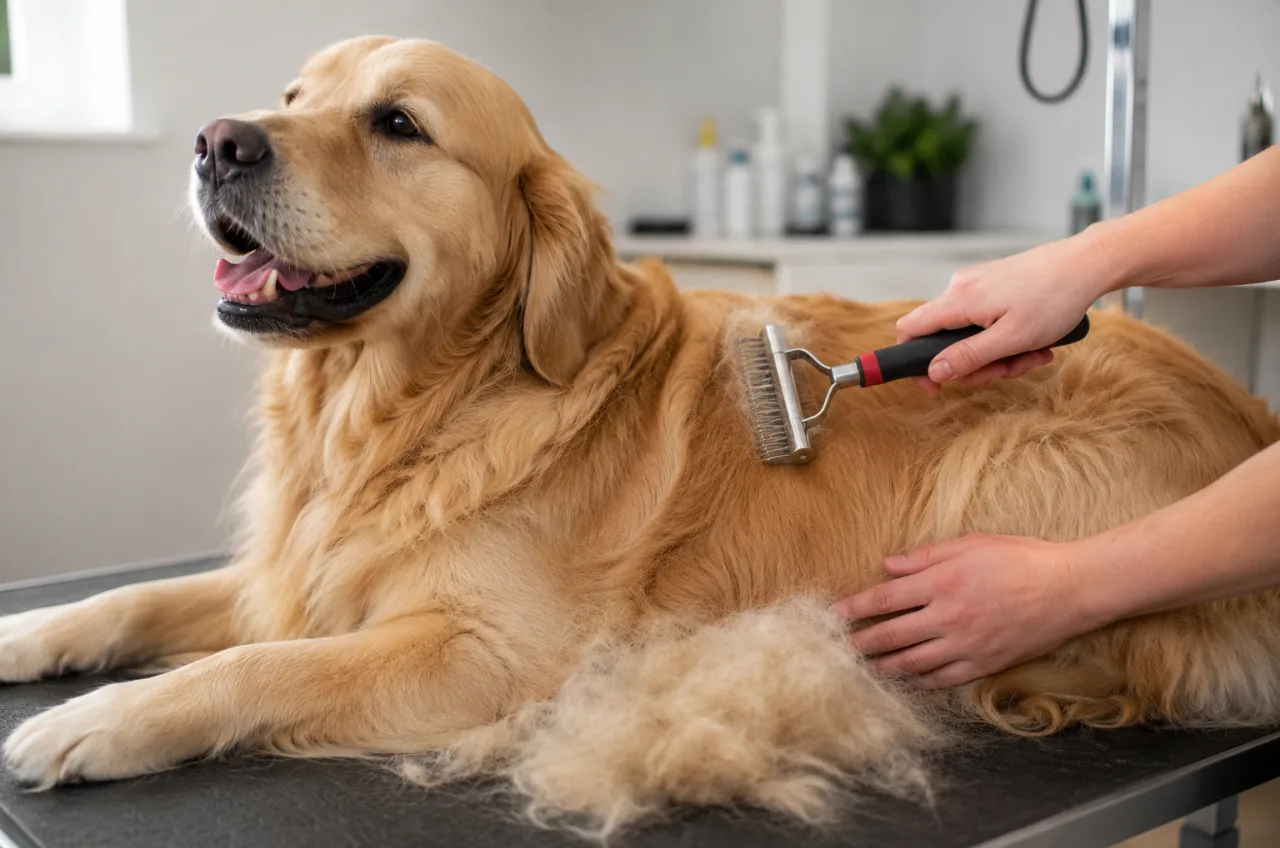
Brush and Comb Regularly
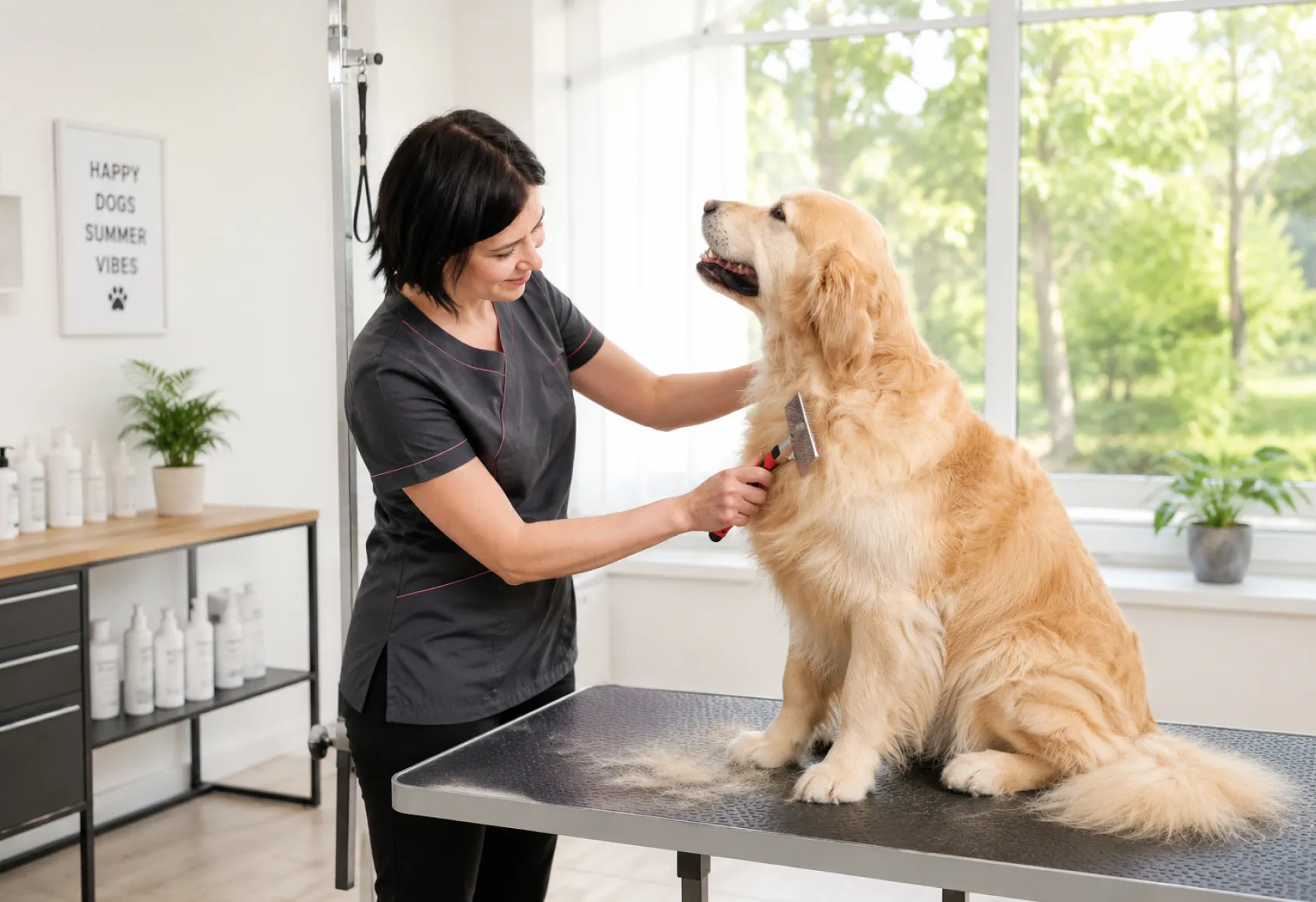
Brush your dog (or cat) thoroughly 3-4 times a week.
Regular brushing helps:
- Remove dead coat
- Eliminate trapped dirt
- Reduce loose undercoat
- Improve airflow to the skin
Bathe Regularly Using Quality Products
A weekly bath can be beneficial during summer, especially if your pet:
- Gets dusty frequently
- Swims often
- Has ongoing skin concerns
Use a shampoo and conditioner suited to your pet's coat and skin type.
Don't skip the conditioner. It helps maintain moisture balance and reduces coat damage.
Never Leave the Coat Damp
One of the most common mistakes I see is pets being left slightly damp after a bath.
Always ensure the coat is completely dry.
A damp coat can lead to:
- Fungal infections
- Hotspots
- Weakened skin barrier
- Knots and matting
- Itching and irritation
Brush Again After Bathing
Once the coat is fully dry, do a thorough brush and comb-through.
This helps:
- Prevent tangles
- Remove dead coat
- Keep the coat healthy and manageable
Choose Practical Haircuts for Long-Coated Breeds
For breeds such as:
- Shih Tzus
- Maltese
- Poodles
- Cocker Spaniels
A manageable short or medium trim can make grooming easier while still protecting the skin.
Short trim? Yes. Zero trim? No.
Don't Skip Professional Deshedding
Double-coated dogs benefit greatly from professional deshedding every 3-4 weeks, especially during seasonal coat changes.
When old coat remains trapped, it can:
- Restrict airflow
- Retain moisture
- Create coat compaction
- Increase hotspots and fungal infections
- Affect healthy coat growth
Light Maintenance Trimming Is Fine
For double-coated breeds, it's perfectly acceptable to lightly tidy areas such as:
- Paw pads
- Underbelly
- Sanitary areas
- Tail feathering
- Around the neck (if necessary)
The objective is maintenance not removing the coat's natural protection.
Swimming Is Great Summer Enrichment
Swimming is one of the best summer activities for dogs.
Benefits include:
- Low-impact exercise
- Mental stimulation
- Cooling relief
- Joint-friendly movement
Just remember to rinse with fresh water afterward and dry the coat thoroughly.
Prioritize Hydration
Fresh, cool water should always be available.
You can also increase hydration by offering:
- Water mixed into meals
- Bone broth
- Curd water (if suitable for your dog)
- Water-rich treats like cucumber and watermelon in moderation
Keep Their Environment Cool
Help your pet stay comfortable with:
- Fans
- Air conditioning
- Coolers
- Shaded resting areas
- Good ventilation
Adjust Walking Times
Avoid the hottest parts of the day.
Instead, opt for:
- Early morning walks
- Evening walks
- Night walks
And always check the pavement temperature.
If it's too hot for your hand, it's too hot for your dog's paws.
Know the Signs of Heat Stress
Watch out for:
- Excessive panting
- Increased drooling
- Lethargy
- Bright red gums
- Vomiting
- Weakness or wobbliness
If you notice these signs, cool your pet gradually and contact your veterinarian immediately.
The Key to Keeping Dogs Cool This Summer
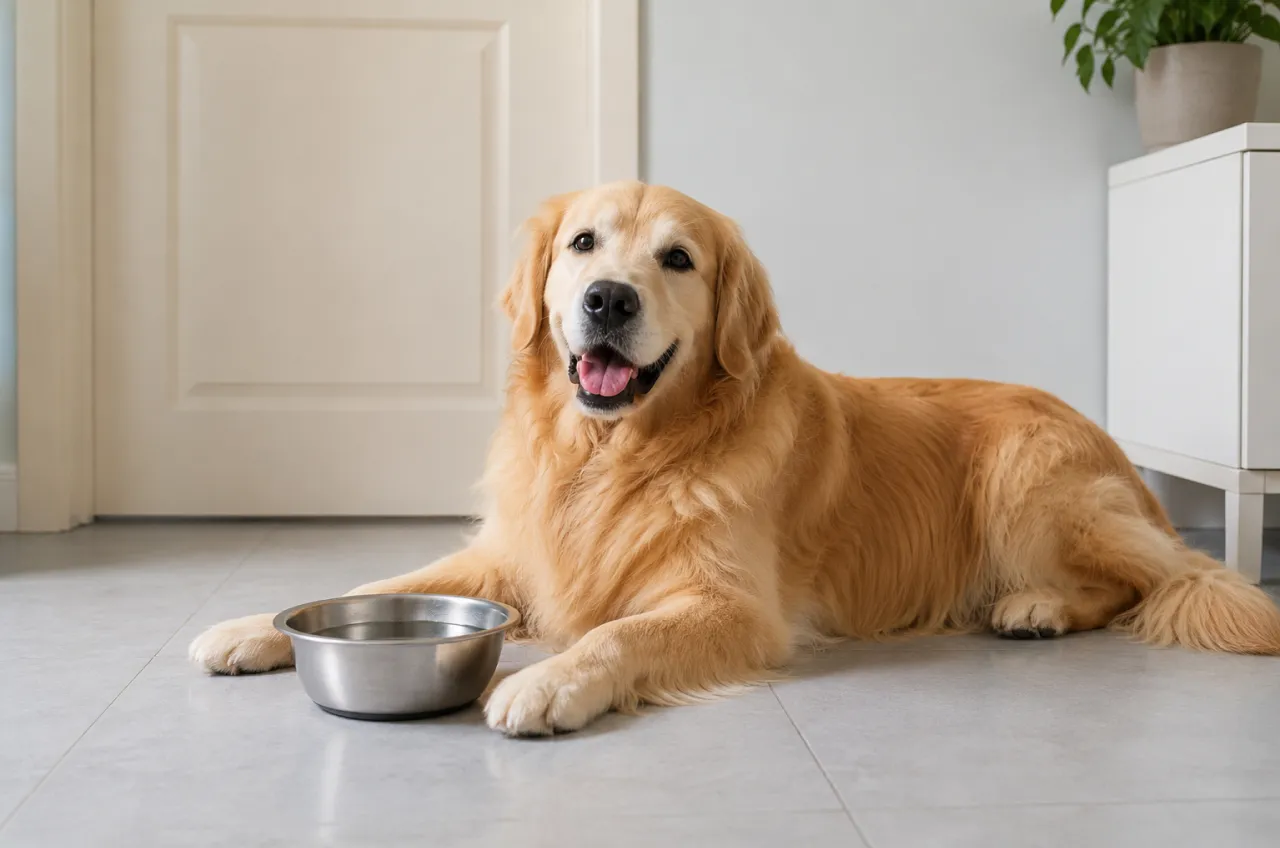
Your dog does not need to be shaved bald to stay comfortable in summer.
What they truly need is:
- Regular coat maintenance
- Proper grooming
- Good hydration
- Adequate airflow
- Smart summer care
Your dog's coat exists for a reason.
Protect it. Maintain it. Work with it not against it.
Conclusion
Your dog doesn’t need to be shaved to stay cool. Just consistent grooming, good hydration, and smart summer care are all it takes to keep them comfortable in the heat. Work with their natural coat, not against it, to keep them comfortable and healthy.