How to Build a Tech Product for the Pet Industry in India (2026 Guide for Entrepreneurs)
A no-fluff, experience-driven roadmap to validating, building, funding, and scaling pet tech products in India - with speed, trust, and real market insight.

3 Min Read
02 Mar, 2026
Social share
Or copy link
https://www.happypet.care/media/blogs/innovation/2026-guide-for-entrepreneurs-building-pet-tech-in-india
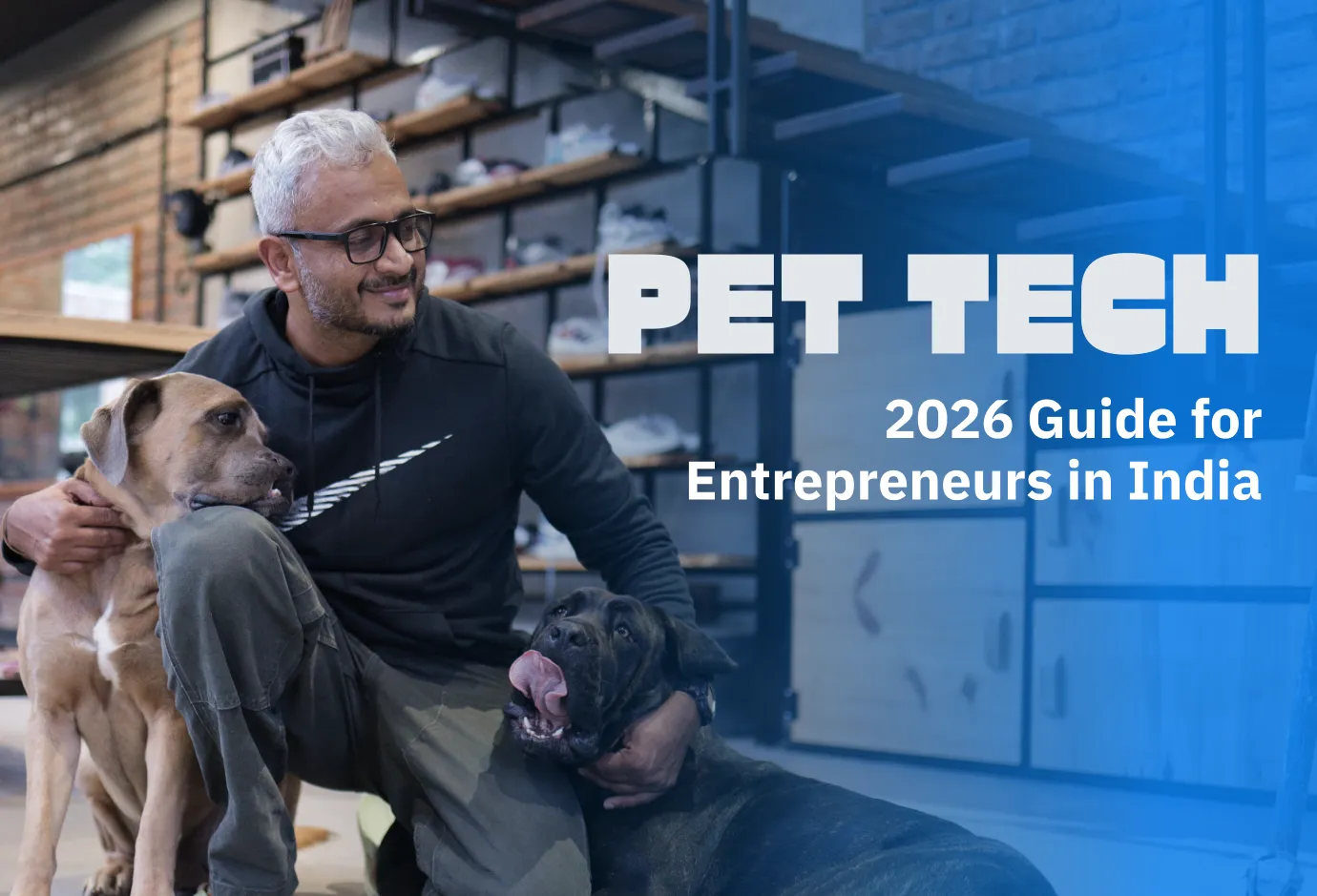
Image source: Happy Pet
Two years in building Happy Pet and 25 years in design and technology, I think I have earned enough credit to write this.
I’m going to cut all the billion-dollar market size slides, CAGR graphs, rising disposable income statistics and all that fluff.
This is not a pitch deck.
This is my purest experience ~ what I have observed, struggled with, tested, and learned while building Happy Pet in India.
If you are an entrepreneur planning to build a tech product for the pet industry in India, read this carefully.
The Indian pet industry is emotional.
- It is not just commerce.
- It is not just product-market fit.
- It is not just tech.
- It is trust.
Pet parents don’t buy because of discounts.
They buy because they feel safe.
Yes, big players like Zepto and Swiggy Instamart are experimenting with pet categories. That tells you demand exists.
But here’s the bigger question:
Who will build a focused, trusted pet-first platform instead of pet being just another category?
Step-by-Step Guide to Building a Pet Tech Product in India
Step 1: Learn the Industry, Don’t Rely on Desk Research

If you think having a pet, reading reports and watching YouTube interviews will give you clarity ~ you’re already behind.
Go offline.
Step away from your laptop and into the real world.
Visit pet stores and watch how products are sold and recommended.
Attend pet expos and see what actually excites pet parents.
Talk to veterinarians about recurring problems they see every day.
Meet groomers and understand operational challenges they silently deal with.
Sit in a dog park and simply observe the conversations between pet parents; what they complain about, what they proudly recommend, what they struggle to find. And above all, don’t just ask whether your idea sounds good; ask them if they will actually pay for your solution. That single question will save you months of assumptions and lakhs of rupees.
This industry runs on emotional buying, but decisions are practical.
If your idea doesn’t solve a real pain, don’t build it.
Validation > Assumption
Step 2: Analyze Time, Effort & Reality Check

This is where most founders quietly crash.
They fall in love with the idea, feel the adrenaline rush, and jump straight into development as if building an app is just about hiring a developer and pushing code.
In that excitement, they forget to calculate the real game ~ the actual tech development cost, the endless iterations, the regulatory approvals if you’re touching food or supplements, the messy supply chain realities, the brutal customer acquisition cost, and the painfully long road to break-even. What looked like a six-month sprint slowly turns into a two-year marathon with bills arriving faster than users. Excitement builds prototypes. Planning builds companies.
Two Major Founder Traps
Trap one: The pet industry expert who thinks tech is easy. You understand pets inside out but then development begins. Suddenly there are sprints, UX iterations, backend issues, scalability problems and something called tech debt eating your timelines. Loving pets doesn’t make software simple.
Trap two: The tech founder who thinks pet is just another category. You build fast and sleek but miss the emotion, trust signals and buying behaviour unique to pet parents. This isn’t food delivery. It’s family.
Both struggle.
The pet expert underestimates tech.
The tech expert underestimates emotion.
The winners learn both or find someone who balances them.
Step 3: Build Fast, Launch Fast, Fail Fast

This is a proven process I introduced in my previous company and it helped multiple startups figure out what actually works in less time, while burning far less money. I’ll write a detailed follow-up article on this framework because if you’re building in the pet industry ~ it can save you months of confusion.
One line I keep repeating to founders (and to myself): Perfection kills speed.
Instead of chasing flawless design and endless features, build an MVP. Launch it to a small, controlled audience. Get real feedback ~ not compliments, not “sounds good,” but actual usage data and paying behaviour. Iterate weekly. Remove what doesn’t work without emotional attachment.
Your first 100 customers are your goldmine. They will tell you more truth than any consultant ever can.
Prove three things before you even think of scaling:
- That your product delivers real value.
- That people come back and buy again.
- That they recommend you without incentives.
Don’t scale before validation.
But don’t overbuild before launch either.
Speed with learning — that’s the balance.
Step 4: Raise Funds Fast & Scale Fast

The pet industry may look warm and fuzzy but the race is real. Indian consumers are already trained by food delivery, fintech, and edtech to expect speed. That expectation applies to pet brands too.
If your product is working i.e. real users, real payments, real traction ~ don’t move slowly. Raise smart capital. Choose investors who understand tech or the pet ecosystem. Don’t chase money alone; chase value, access, and experience.
Speed + Capital + Execution = Category Leadership.
Pause too long, and someone faster will take your spot.
Step 5: Celebrate, Then Go National (or Global)

And if your product has global potential? Don’t just update your LinkedIn bio to “Going Global.” Pack your bags. Show up at international pet expos. Understand compliances and certifications before customs teaches you the hard way. Find strong local partners who know the ground reality better than Google ever will.
And here’s the real trick, don’t enter a country as a tourist brand. Enter like a local. Think of Bata ~ most of us grew up believing it’s as Indian as school uniforms. Go ahead, Google where it’s actually from. 😉
That’s the game. Build global. Feel local.
Final Thoughts
If you are planning to build a tech product for the pet industry in India:
- Go deep, not wide.
- Build for value.
- Validate with real people.
- Move with speed.
- Scale with intelligence.

Conclusion
India is ready. The pet industry is ready. The question is ~ are you ready? If you have a killer idea, talk to me. FYI: “No ideas in mind” or “I have a great idea”, doesn’t help. Show me progress. Show me validation. Show me effort. Then let’s build something meaningful.
written by
Anil ReddyAuthor