
Bulldog Nutrition Guide 2025: What to Feed & What to Avoid
Bulldog nutrition made simple. Age-wise diet tips, what to feed or avoid, feeding schedules, and expert advice for a healthy, happy pup.

5 Min Read
28 Jun, 2025
Social share
Or copy link
https://www.happypet.care/media/blogs/parenting/bulldog-nutrition-guide
Why Bulldogs Need a Special Nutrition Guide? Learn What Foods to Feed & What To Avoid!
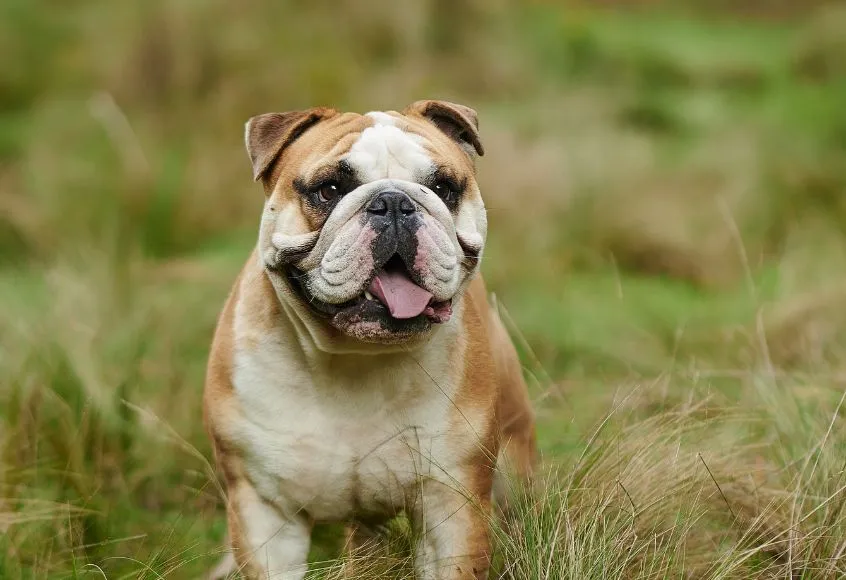
Bulldogs are unique in their own way compared to other breeds. They are known for their short snouts (brachycephalic), plump bodies, and are somewhat sensitive about what they eat.
So, a standard dog food diet is not enough. You need a bulldog nutrition guide that’s made just for them.
Their diet should be a mix of -
- Muscle-friendly proteins
- Energy-giving fats
- Easy-to-digest carbs
- Vitamins and minerals for both strong bones and the immune system
What makes it even better? You don’t have to use expensive products. Good food and enough knowledge make everything better.
Bulldog Nutrition Guide for Every Life Stage
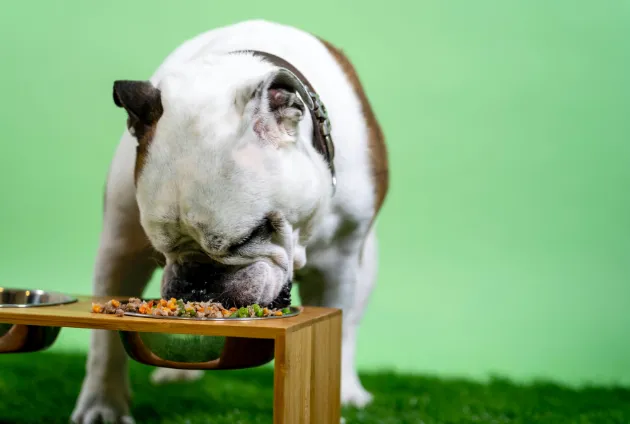
Bulldogs’ diets should vary depending on how old they are, much like people. So here’s a quick breakdown of what your bulldog nutrition guide should look like as they grow.
Feeding Guidelines for Bulldog Puppies(2–6 months)
When your bulldog is a puppy, it’s full of energy and growing very quickly. Your bulldog nutrition guide should include:
- 22–25% protein
- 10–12% fat
- 1000–1200 calories a day
Provide a meal that is soft, packed with essential nutrients, and is gentle on the stomach.
Feeding Guidelines for Adolescent Staged Bulldogs (6–12 months)
Your puppy has become quite a chunky teen already. This stage in the bulldog nutrition guide includes:
- 20–23% protein
- 12–15% fat
- 1200–1500 calories a day
The food you feed your pet should include calcium and phosphorus to support its bones.
Feeding Guidelines for Adult Bulldogs (1–7 years)
Now your bulldog is all grown up. Their bulldog nutrition guide should aim for:
- 18–21% protein
- 15–18% fat
- 1500–1800 calories a day
Now you should feed your dog adult food that supports a healthy and well-balanced diet.
Feeding Guidelines for Senior Bulldogs (7+ years)
Growing older, bulldogs need fewer calories than they did before. Their bulldog nutrition guide should include:
- 14–17% protein
- 10–12% fat
- 1000–1200 calories a day
Cut down the food but add more love—don’t miss including calcium and joint supplements as well.
What to Feed: Foods Your Bulldog Will Love?
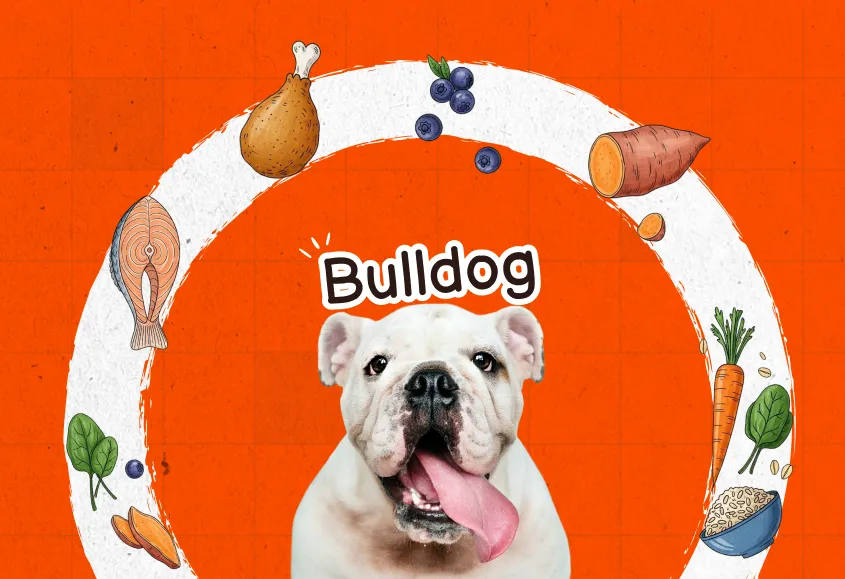
Let’s get into the good stuff—what should actually go into a bulldog nutrition guide?
Protein Is a Must
Choose foods that mention chicken, turkey or fish as their main ingredients. Protein supports the development of muscles and keeps them active.
Healthy Carbs
Your bulldog nutrition guide should include carbs like brown rice, sweet potatoes, and oats. They supply energy and help make their stomach feel comfortable.
Vitamins & Minerals
You can try blueberries, spinach, or carrots. They strengthen the immune system and make their fur look shiny.
Don’t Forget Water
Keeping fresh water within reach is absolutely necessary. Hydration is a big part of any bulldog nutrition guide.
Bulldog Nutrition Guide: Top Brands to Consider
Some manufacturers have dog food made just for bulldogs.
One example is Royal Canin, whose kibble has a wavy shape so that bulldogs can chew it well.
Pick up products that contain:
- Omega-3 fatty acids are great for joints
- Glucosamine and chondroitin (helpful for joint support)
- Easily digestible ingredients
When in doubt, read what the product label says and talk to your veterinarian.
Foods to Avoid: What Should Never Be in a Bulldog’s Bowl
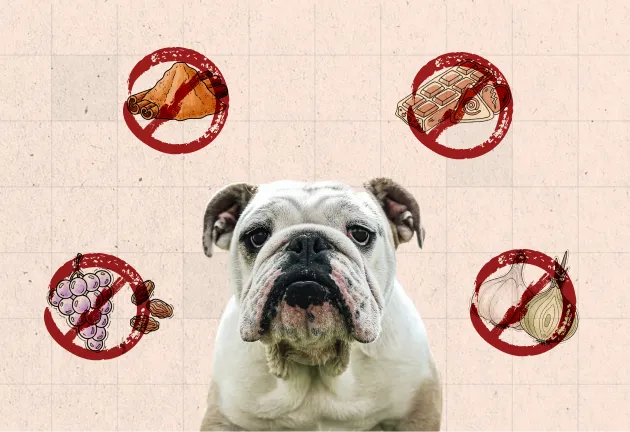
This matters a lot. The best bulldog nutrition guide doesn’t just tell you what to give—it tells you what to never give. Certain human foods are highly hazardous for dogs.
Chocolate
A small piece can still cause a lot of harm. Chocolate includes a chemical that can influence dogs’ hearts and brains.
Cinnamon
Even if it smells great, it can still make your dog sick and might harm its liver.
Onions & Garlic
They can make red blood cells break down, resulting in weakness or vomiting.
Grapes & Raisins
The reason is unknown, but they may cause kidney failure in certain dogs.
A golden rule: If you’re not sure it’s safe, don’t include it in your bulldog nutrition guide.
Appropriate Feeding Schedule for Bulldogs from Experts
Do you feed your bulldog only once daily?
That’s a big no-no. The right bulldog nutrition guide says: break meals into two smaller portions a day.
Why? Because:
- It reduces gas (bulldogs are gassy!)
- It prevents bloating
- It keeps energy levels steady
Always use a measuring cup to prevent adding too much food. Bulldogs are prone to gaining weight, which puts a lot of extra pressure on their joints and heart.
Bulldog Nutrition Guide for Special Cases
Every bulldog is different. Your bulldog nutrition guide might need tweaks if your dog has:
- Allergies (common in bulldogs)
- Skin issues
- Weight problems
- Breathing trouble (due to their short noses)
If your pet is scratching, suffering from ear problems, or having digestive issues, food may be the cause. Time to consult the vet and adjust the bulldog nutrition guide.
Expert Opinions on Bulldog Nutrition
The American Kennel Club believes that the health of a dog depends greatly on proper nutrition. They suggest picking your pet’s food according to their breed, size, age, and current health. Bulldogs are often advised to avoid raw diets by vets since their digestive systems are sensitive. It’s better to choose nutritious store-bought food or meals suggested by your vet.
Your bulldog nutrition guide should always be based on professional advice, not just online tips.
Conclusion
Giving your bulldog food should be more than simply dumping it in a bowl. It aims to help pets live longer, thrive, and keep wagging their tails. Be sure to notice any changes in your bulldog’s routine. They will help you see what styles are right for you and which aren’t.
written by
Happy Pet TeamAuthor