From Rescue Shelters to Elite Dog Training: The Journey of Tara James
Founder — Canine Synergy & Anarchy K9 Canine Behaviour Specialist & Working Dog Trainer

5 Min Read
15 Dec, 2025
Social share
Or copy link
https://www.happypet.care/media/podcast/animal-rescue/from-rescue-shelters-to-elite-dog-training-the-journey-of-tara-james
Takeaways
- Started volunteering at a dog shelter at 16, working with high-risk and aggressive dogs.
- Found purpose in rescue, rehabilitation, and behaviour work while coping with bullying and depression.
- Dropped out of school, took a gap year, and chose dogs over a conventional academic path.
- Worked full-time at a shelter, handling 100+ dogs, rescues, behaviour issues, and adoption counselling.
- Witnessed the harsh reality of pet abandonment, especially during and after COVID.
- Built her career by shadowing mentors, taking specialised dog behaviour and training courses across India.
- Founded Canine Synergy, a farm-based board-and-train and behaviour-focused training centre in Whitefield, Bangalore.
- Runs Anarchy K9, a working dog club inspired by PSA (Protection Sports Association), training high-drive dogs in advanced obedience and controlled protection.
- Believes dog training is not a hobby, but a lifestyle — for both trainer and family.
- Advocates for education-first, judgement-free guidance for pet parents, even when they are giving up their dogs.
Guest Introduction
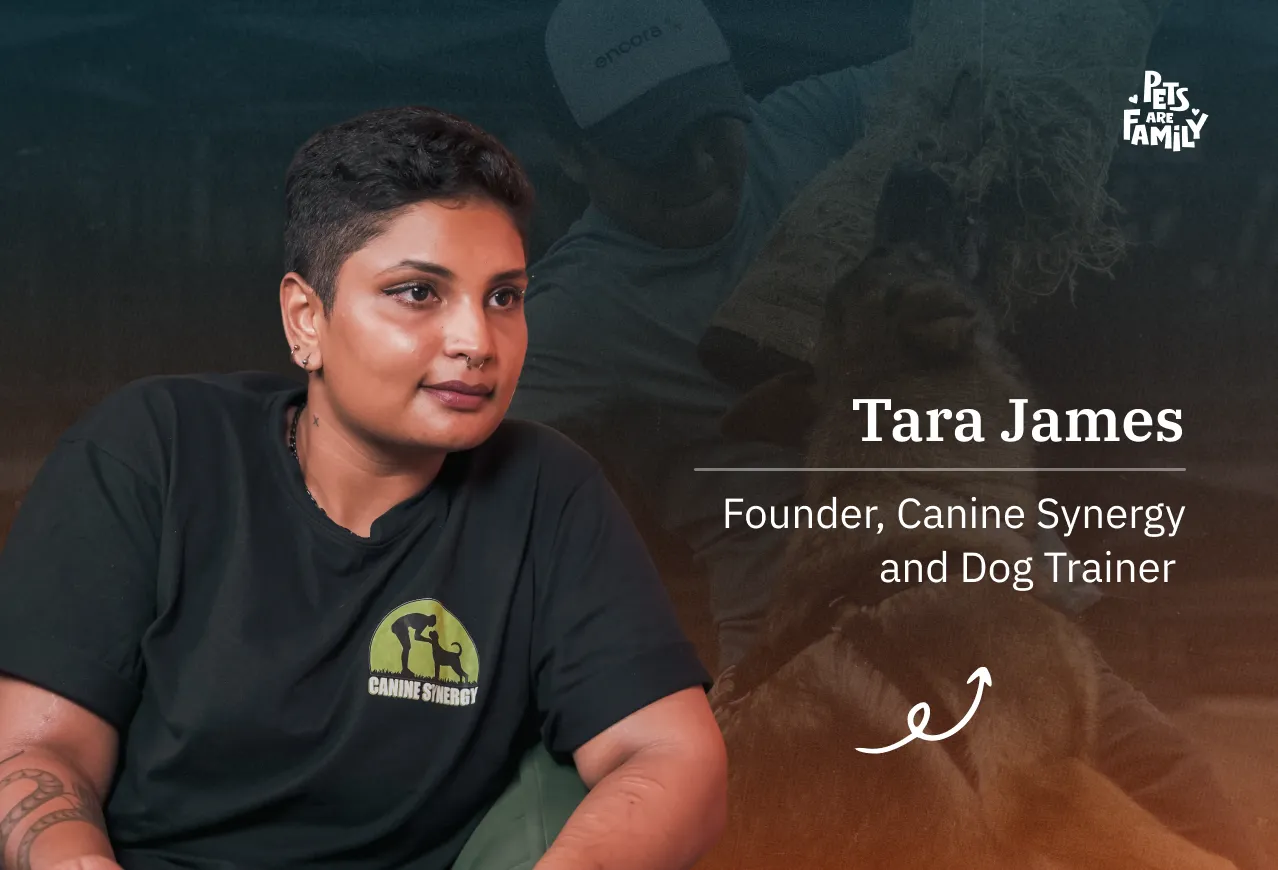
Tara is a passionate and highly skilled dog trainer with over seven years of hands-on experience in canine behaviour and training. Her journey began in the rescue world, working with shelter dogs in Bangalore — many of them with aggression or complex behavioural issues that most shelters refused to take in. What started as a way to cope with her own struggles soon became her life’s purpose: helping dogs and humans live together in true harmony.
Today, Tara is the founder of Canine Synergy, a specialised dog training facility set on a farm in Whitefield, Bangalore. There, she offers board-and-train programs, behaviour rehabilitation, and advanced obedience for both pet and working dogs. She also runs Anarchy K9, a working dog club inspired by American PSA sport, where she trains high-drive dogs in precision obedience and controlled protection.
Known for her holistic, dog-first approach, Tara doesn’t just “fix” dogs — she trains families. She believes training must be built around the real lifestyle of the pet parent, so that results are sustainable and the dog’s emotional and behavioural needs are truly met.
Founder’s Story
Tara’s story is not one of neat timelines and traditional success. As a teenager, she was bullied, mentally exhausted, and struggling to fit into a system that didn’t make sense to her. In the middle of this, dogs were her constant comfort. When school became unbearable, she dropped out, took a gap year, and made a decision that most 16-year-olds wouldn’t: she walked into a dog shelter and asked to work with their toughest cases.
That shelter specialised in dogs with behaviour issues — fear aggression, reactivity, trauma, abandonment. Tara learned to read body language in real time, broke up dog fights, handled adoptions, did first-aid, ran social media and educated adopters. She was bitten, tested and emotionally drained, but each experience only convinced her more: this is what she was meant to do. From there began a journey of structured learning, mentorship, and ultimately entrepreneurship — creating training spaces where dogs and humans are both understood, not judged.
Headlines Related to the Podcast
- From Shelter Volunteer at 16 to High-Drive Working Dog Trainer
- Why Dog Training Is Not a Service, but a Lifestyle
- COVID Dogs, Abandonment, and the Dark Side of Pet Parenting
- Inside Canine Synergy: Farm-Based Training for Real-Life Behaviour
- How Tara Handles Aggression Cases Without Blaming the Dog
- The Hard Truth About People Who Give Up Their Dogs
Episode Deep Dive
From Bullying and Depression to Finding Purpose in Dogs
Tara didn’t stumble into dog training by accident — it was survival.
As a teenager, she shifted schools, faced severe bullying and spiralled into depression. The one stable, comforting presence was her dog at home. When things became unmanageable, she dropped out of school, took a gap year, and asked herself one simple question: What genuinely makes me feel okay? The answer was always the same — dogs.
So she decided to volunteer at a dog shelter. While her peers were going to class or coaching, she was catching buses across Bangalore, spending her days surrounded by rescued dogs with complex histories. What felt like a “gap year” became the foundation of her life’s work.
Learning in the Deep End: Life Inside a Behaviour-Focused Shelter
Unlike many shelters that refuse to take in dogs with aggression or serious behavioural issues, the shelter Tara joined specialised in exactly that. They:
- Took in dogs with bite histories, fear aggression, and trauma
- Rehabilitated them as much as possible
- Looked for carefully vetted homes willing to manage and understand these dogs
In the early days, Tara:
- Spent weeks just observing dogs and handlers
- Watched how trainers read body language and prevented fights
- Gradually moved into handling, feeding, cleaning, and basic training
Over time, she worked with:
- 30–50 dogs at a time in one space
- Dog fights and conflict management
- Incoming rescues in poor condition
- Adoption counselling for prospective pet parents
Every dog that bit her wasn’t a reason to quit — it was feedback. She’d go back, replay what happened, and ask,
“What did I miss? What signal didn’t I read?” That mindset shaped her into a behaviour specialist, not just a trainer.
The Emotional Toll: Abandonment, COVID Dogs, and Judgement-Free Conversations
Working at a shelter didn’t just mean handling dogs — it meant facing human behaviour too. Tara saw:
- People casually giving up dogs for “lack of time”
- Young professionals adopting during COVID for company, then surrendering dogs once offices reopened
- Dogs with severe separation anxiety and reactivity because they grew up in quiet, lockdown streets and were never exposed to real-world stimuli
Shelter staff tried to:
- Educate owners on training and behaviour
- Connect them with trainers
- Offer options before surrender
But Tara realised a hard truth:
If you judge people too harshly when they want to give up a dog, they will simply:
- Tie the dog to a pole
- Abandon the dog in a forest or empty area
- Rehome the dog irresponsibly to someone even less prepared
So she learned to stay calm, empathetic and strategic — to at least ensure the dog landed somewhere safer than the roadside.
The most common excuse she heard?
“I don’t have time. My work has changed.”
The lamest (and saddest) excuse?
“I’m getting married and my partner doesn’t like dogs.”
For Tara, that was the hardest to digest. People were giving up dogs who had been with them for 5–7 years — through breakups, bad days and life milestones — because a new partner wasn’t comfortable.
When Shelter Stress Meets Personal Burnout
On the outside, Tara was doing meaningful work. On the inside, her lifestyle was taking a toll:
- Long hours in the sun
- Six-day work weeks (with Monday as the only weekly off, a pattern that continues even now)
- Poor eating habits and exhaustion
- Emotional overload from constant rescue, rehab and loss
She pushed herself so hard that she began fainting. That’s when she realised: she needed to pause, regroup, and find a sustainable way to stay in this field.
Choosing Behaviour as a Career: Courses, Mentors, and Clarity
The shelter gave her breadth of exposure — everything from rescue and basic treatment to adoption counselling and everyday handling. What she loved most was clear:
behaviour and rehabilitation.
So she:
- Took dog behaviour and training courses across India
- Studied theory and practicals
- Shadowed experienced trainers and mentors
- Focused on understanding why dogs behave the way they do
Instead of chasing certificates, she chose mentorship and real-world learning: walking with trainers, watching sessions, asking questions, handling difficult dogs under supervision.
This gave her something formal courses often don’t: hundreds of dogs of experience before even starting her own business.
Leaving Home at 18 and Redefining “Success” for Her Family
For her family, Tara’s path was confusing and scary at first.
- She quit formal education
- Started working at a shelter
- Left home at 18
- Chose an income-uncertain, physically demanding, emotionally heavy career
Her dad, an IIT Kanpur alumnus, struggled the most. To him, dog training looked like a waste of her potential. Her mom, more emotionally tuned in, worried but still wanted her happiness.
Over time, what changed things was not words, but consistency:
- Tara kept showing up for the work
- She didn’t “grow out of it” or quit when things got hard
- She progressed — from volunteer, to staff, to trainer, to entrepreneur
Eventually, her parents shifted from resistance to curiosity to support — visiting shelters, understanding her work and respecting her choices.
Founding Canine Synergy: A Farm Where Training Meets Real Life
By 21, Tara took the next big step — entrepreneurship.
She opened her first training studio, outgrew it, and then moved into her current avatar:
Canine Synergy
A specialised dog training facility based on a farm on the Whitefield–Hoskote stretch.
Here, she offers:
- Board-and-train programs
- Advanced obedience
- Behaviour modification for issues like reactivity, fear, aggression, anxiety
- Structured environments for working breeds and high-drive dogs
Her typical month looks like:
- 8–10 client dogs in training
- 3 of her own competition prospect dogs
- 10+ rescue dogs under her care
She literally lives on the farm — waking, working, and winding down with dogs around her.
Anarchy K9: Working Dogs, PSA, and Controlled Power
Alongside pet training, Tara runs Anarchy K9, a working dog club inspired by American PSA sport.
Here, the focus is on:
- High-drive breeds
- Precision obedience
- Control under high arousal
- Protection work with strict structure and safety
She’s not just training — she’s also competing in PSA with her own dogs, which keeps her constantly learning and refining her craft.
Training as a Lifestyle, Not a Side Gig
One of Tara’s strongest beliefs is that dog training is a lifestyle, not a side hustle or casual job.
For her, that means:
- Living on-site with the dogs
- Structuring her day around feeding, training, rest, play and recovery
- Constantly observing, tweaking and adapting protocols
- Staying fit enough mentally and physically to handle demanding dogs
For pet parents, this translates to:
- Being realistic about the life they can offer
- Understanding that 15 minutes of walk twice a day is not enough for many dogs
- Accepting that training is not a one-time event, but an ongoing relationship
She often tells clients:
“I don’t just train your dog. I train everyone in your house.”
Her model includes:
- In-person sessions
- Home visits
- Online consultations based on need
- Education on routines, boundaries, enrichment and communication
Lessons for Future Dog Trainers and Pet Parents
For aspiring trainers, Tara’s advice — based on her own path — is simple:
- Don’t romanticise the job. It’s hard, physical, emotional work.
- Spend time in shelters or with established trainers before deciding.
- Shadow someone whose values and methods you respect.
- Understand that this field demands a lifestyle shift, not just a course certificate.
For pet parents, she leaves a few key messages:
- Don’t get a dog out of loneliness, boredom or social pressure.
- Be honest about your time, energy, and lifestyle before adopting or buying.
- If you already have a dog and are struggling — reach out for help early.
- Training isn’t about “fixing” your dog; it’s about building a communication system that works for both of you.
Conclusion
From walking into a shelter as a depressed 16-year-old volunteer to running a full-fledged training farm and working dog club, Tara’s journey shows what happens when passion, purpose and persistence align. She has seen the worst sides of human behaviour — abandonment, irresponsibility, denial — and still chooses to show up every day for the dogs and the people who are willing to learn. Her story is not just about dog training. It’s about choosing an unconventional path, staying with it through conflict and chaos, and building a life where work, purpose and identity all point in the same direction: towards the dogs. 🐾
written by
Happy Pet TeamAuthor