Hari Shankar on Fixing India’s Low-Trust Pet Food Market
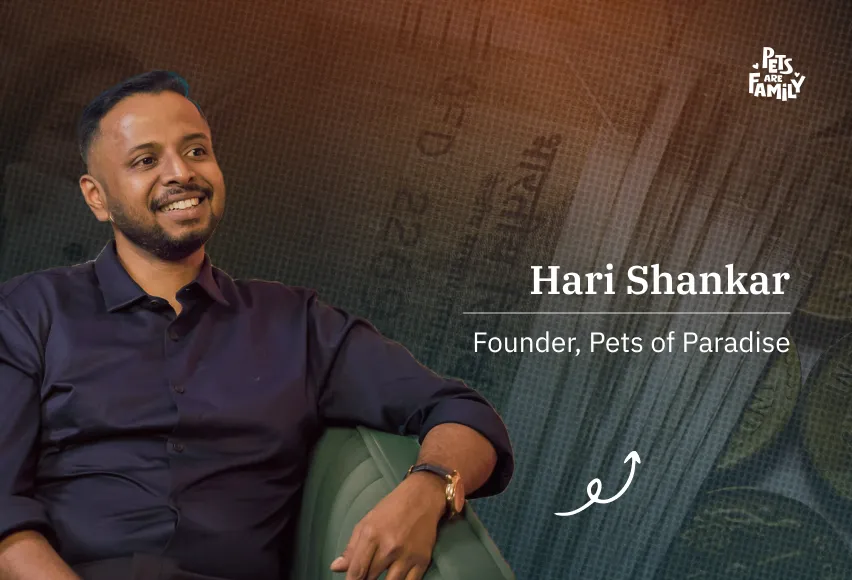
Raised among 20+ dogs and rooted in pet food manufacturing since 1997, Hari Shankar now leads Pets of Paradise with a mission to bring clean, Indian-style nutrition and better education to a fast-growing but low-trust pet industry.

4 Min Read
25 Nov, 2025
Social share
Or copy link
https://www.happypet.care/media/podcast/startup-stories/inside-pets-of-paradise-with-hari-shankar
Takeaways
- Comes from a family with deep roots in pet food manufacturing since the late 1990s.
- Grew up surrounded by 20+ dogs and 15–20 cats, shaping his lifelong passion for animals.
- Leads food manufacturing and operations at Pets of Paradise, shaping their signature meals.
- Focuses on preservative-free, Indian-style pet food that is nutritious, affordable, and familiar.
- Runs one of the largest standalone distribution and supply chain businesses in India.
- Founded Pets of Paradise to make a direct impact on pet parents, not just retailers.
- Inspired by his adopted Indie dog, Milo, and the discrimination Indie pet parents face.
- Highlights India’s lack of pet food regulations and the misinformation pet parents often follow.
- Shares insights into the Indian pet industry’s size, spending patterns, and growth trajectory.
- Predicts a major industry “J-curve” around 2028–2029 driven by Gen Z pet parents.
- Advocates for community building, better education, and tech-enabled pet care solutions.
Founder’s Story
Hari Shankar’s journey into the pet industry began long before he started working professionally. Born into a family that ventured into dog food manufacturing as early as 1997—well before global brands entered India—Hari grew up inside factory walls filled with dogs, cats, and the sounds of production. This early exposure shaped his understanding of nutrition, operations, and the challenges of pet food manufacturing. Today, as the head of food operations at Pets of Paradise, he blends that legacy with a modern mission: creating healthy, preservative-free meals like Indian Hound and Indie Cat, designed to feel like home-cooked food. Inspired by his adopted dog Milo and driven by a desire to empower pet parents, Hari is committed to making clean, accessible, and culturally aligned pet nutrition the norm in India.
Headlines Related to the Podcast
- How Growing Up With 20+ Dogs Shaped Hari’s Career
- Inside the Mission Behind Pets of Paradise
- The Truth About India’s Low-Trust Pet Food Market
- Indian Home-Cooked Food for Pets — A New Movement
- Industry Trends, Spending Patterns & What’s Coming in 2028
- Why India Needs More Visionaries, Not Just Competitors
- Tech as the Future of Pet Care: Hari’s Bold Prediction
Episode Deep Dive
A Lifelong Passion Built on Early Exposure
Hari grew up in a household where pets outnumbered people. With 20 dogs and nearly as many cats around him, the pet world felt like home. His father began manufacturing dog food in 1997, making Hari one of the earliest insiders in the Indian pet ecosystem. This environment gave him both emotional grounding and a deep technical understanding of nutrition and production. For Hari, entering the pet industry felt natural—almost inevitable.
From Distribution Success to Building Pets of Paradise
While Hari runs one of India’s biggest standalone pet distribution and supply chain operations, he often felt disconnected from the end consumers — pet parents. Distribution ended at the store shelves, not in homes. That changed when he adopted Milo, a street dog. The discrimination he faced from people who preferred pedigreed dogs made him rethink the industry’s narrative. Pets of Paradise was born to change that — to empower pet parents, uplift Indie dogs, and make pet care more inclusive.
Understanding India’s Low-Trust Pet Food Market
India is one of the only countries with zero pet food regulations. This leads to:
- Rampant misinformation
- Humanizing pets incorrectly
- Unsafe feeding practices
Hari explains that many pet parents assume that what is good for a baby is good for a dog — a dangerous misconception. For example, 60–70% of puppies are lactose intolerant, yet many people still feed them milk.
The Size and Spending Patterns of the Indian Pet Industry
Hari breaks down the surprising reality of India’s pet economy:
- The industry is worth ₹8,000–₹10,000 crores.
- Only 7–8% of Indian households have pets.
- Just 10% of pet parents account for the majority of industry spending.
- The average monthly spend is ₹1,500 — nearly one-tenth of the U.S. average.
While the U.S. sees 65% household penetration, India’s market is still nascent and highly fragmented.
Booms, Corrections & the Next Big Wave
The industry saw a massive boom between 2019 and 2021, driven by the COVID pet adoption surge. But this also caused abandonment when life returned to normal. Today, the market is stabilizing. Hari predicts the next major spike — a J-curve — will arrive around 2028–2029, when Gen Z enters the age bracket for first-time pet ownership.
A Follower Industry That Needs Visionaries
Hari believes the Indian pet sector is still a follower industry. Most brands compete for the same small set of spending pet parents instead of expanding the market. What India truly needs, he says, is:
- Better education
- More transparent brands
- Clearer communication
- Community-driven initiatives
He stresses that building an informed pet parent community will determine the future.
Tech as the Future of Pet Care
Hari envisions a transformative opportunity:
A pet-tech platform where parents can store everything — health records, food logs, vet visits, prescriptions — in one place. This data could eventually shape:
- Smarter nutrition recommendations
- Pet insurance
- Better preventive care
He believes tech entrepreneurs who understand the Indian context will define the next generation of pet care.
Conclusion
Hari Shankar’s journey shows how lifelong passion, industry experience, and a mission-driven mindset can reshape pet care in India. His work at Pets of Paradise champions clean nutrition and smarter, tech-enabled solutions for a healthier future for pets.
written by
Happy Pet TeamAuthor