
Confused Over India’s Stray Dog Feeding Rules? Read On!
Despite clear legal guidelines, feeding stray dogs remains a flashpoint in India’s societies, revealing deep misunderstandings and legal grey zones.

8 Min Read
06 Aug, 2025
Social share
Or copy link
https://www.happypet.care/media/news/pet-laws/understanding-stray-dog-feeding-laws-india
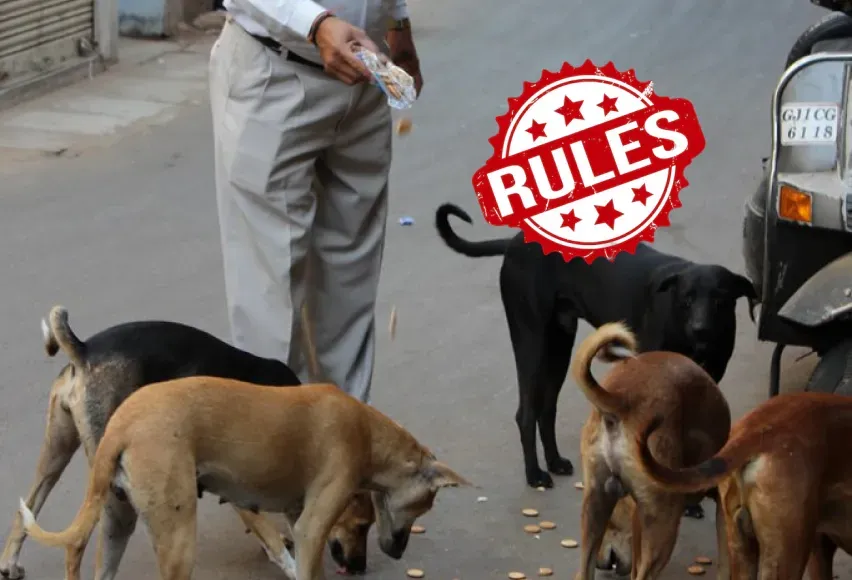
In neighborhoods across India, from gated societies in Bengaluru to narrow lanes in Delhi, a quiet but persistent conflict unfolds every day. It’s not always loud, but it’s emotionally charged: Can you feed stray dogs? And if yes, where, when, and how?
On one side are citizens who feel a deep sense of compassion for animals that live on the streets, often cold, hungry, and scared. On the other side are residents worried about safety, hygiene, and noise, especially with children and seniors around. In the middle are Resident Welfare Associations (RWAs), animal lovers, security guards, and a host of legal rulings trying to strike a balance.
The Animal Birth Control (ABC) Rules, 2023, laid down under the Prevention of Cruelty to Animals Act, 1960, try to offer that balance. They make it clear: feeding community dogs is legal, but it must be done thoughtfully and in designated areas.
These feeding spots should be away from building entrances, staircases, children’s play areas, and must be maintained with proper hygiene. Feeding should ideally take place during quieter hours, preferably early mornings or late evenings to avoid disruptions.
Importantly, RWAs and AOAs cannot outright ban stray feeding. But, they are allowed to work with residents to decide on appropriate locations and timings, in the interest of public peace. Feeders, too, have a role to play beyond just offering food. They're encouraged to assist with vaccinations, sterilizations, and ensure their feeding doesn’t turn into a health or safety hazard.
Misunderstandings and Mixed Messages
The confusion, however, often stems from how these rules are understood—or misunderstood.
In a recent 2025 Supreme Court hearing, judges noted that while citizens have the right to feed strays, it may be better if they do it within their own premises rather than public areas. It wasn’t a ban. However, many RWAs across the country interpreted it that way, sparking new arguments and tension in communities.
Meanwhile, High Courts in Delhi and Bombay have reaffirmed that feeding is allowed, but with guardrails. Which means:
- No feeding near children’s areas
- No obstruction of public spaces
- And ideally, clear coordination with local authorities and animal welfare bodies.
But here’s where the gap lies: implementation. Many housing societies still lack proper feeding zones. Few have functioning Animal Welfare Committees to step in when tempers flare. The result? Arguments that escalate into threats, complaints, or worse, demands to remove the dogs that are many a time given into.
The Legal Status of Street Dogs
Under Indian law, these animals aren’t just strays. They are recognized as “community dogs”, with the right to live in the areas they belong to. If sterilized, they cannot be relocated, unless there’s a serious safety or health risk. They have a right to food, water, and protection—something courts have consistently upheld.
But the ground reality is messier. Reports of dog bites and aggressive behavior in some cities have raised public alarm. Where some see scared animals defending themselves, others see a threat that needs to be removed. And that’s where the emotions get complicated.
Animal rights advocates insist that feeding and sterilizing dogs is not just kindness—it’s a way to prevent aggression, control population, and reduce conflict. But for residents who’ve seen fights break out or children scared, it’s hard to see it that way.
A Tangle of Laws and Emotions
There’s no blanket ban on feeding stray dogs in India. But there is a strong push to regulate it, and for good reason. What’s often missing is clear communication, active involvement from local bodies, and a shared understanding among residents.
Experts across the nation say the solution lies in awareness and cooperation. Every housing complex needs designated feeding spots, rules that are fair, and committees that mediate, not escalate. Until then, the law might protect feeders and dogs—but not from misunderstandings.
For now, the fight over feeding bowls isn’t just about food. It’s about space, safety, compassion, and coexistence. And until the rules are followed with empathy and enforcement, this quiet conflict will continue, in streets, WhatsApp groups, and society meetings.
written by
Happy Pet TeamAuthor