Strict Chart of Puppy Vaccination Dates: First 12 Months
Are you overwhelmed by your puppy’s vaccination schedules and vet appointments? Read this blog to create a stress-free vaccination chart for your cuddly and cute puppy

5 Min Read
02 Jun, 2025
Social share
Or copy link
https://www.happypet.care/media/blogs/parenting/puppy-vaccination-chart
If we ever meet a genie, the only wish we would ask as pet parents is for our dog to live forever.
Because we know how much our dog’s health matters to us.
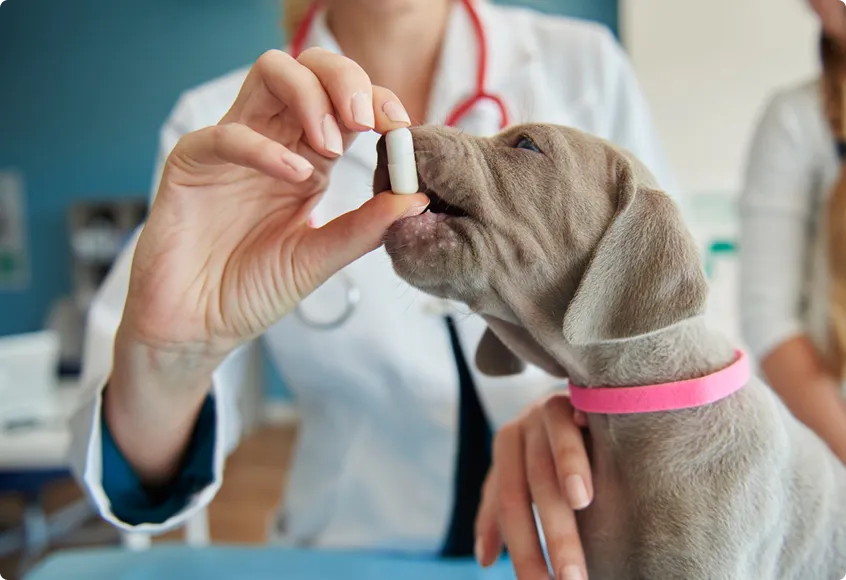
One way to protect their health from an early stage is vaccination.
But, as a dog parent, I know how much work and effort it would take to prepare a proper vaccination date chart.
In this blog, you will get to know about the importance of following puppy vaccination dates, which vaccines your puppy needs, and we have included a sample vaccination date chart for the first 12 months.
Why do you need to vaccinate your puppy?
Like humans, dogs have also been affected by many fatal diseases throughout history. To prevent that, researchers developed vaccines for the most common dog diseases.
Puppies have less immunity compared to dogs. A strict vaccination schedule can increase their immunity against deadly diseases.
For example, in India, after mandating rabies vaccination for every dog, the rabies cases in people dropped from 2.36 to 0.41 per 10 million population. By vaccinating, you can save both yourself and your dog’s health.
And Vaccination certification is mandatory in all dog boarding, day care, and grooming centers.
Why is it important to follow strict vaccination dates?
Puppies gain immunity from their mother’s milk. But once they leave their mothers, their antibody level starts to decrease. This happens around 6-8 weeks.
If we vaccinate them during that stage, we can improve their immune system, and a regular booster shot helps to maintain their immune memory against the pathogens.
A strict vaccination date schedule ensures a healthy, lively puppyhood.
Which vaccine shots does your puppy need?
There are many vaccines available now for different needs. But usually, the vaccines are divided into two types: core and non-core vaccines.
1. Core Vaccines:
Core vaccines are mandatory for all dogs in India. Because the vaccines prevent dogs from contagious and deadly diseases. Two core vaccines are:
· DHPP Vaccine (Distemper/Adenovirus Hepatitis/Parvovirus/Parainfluenza virus vaccine)
· Rabies Vaccine
DHPP vaccine:
The DHPP vaccine is also called DA2PP, DHPPi, or DAPP vaccine. This single vaccine prevents five diseases. You can start this vaccine from 6 weeks and inject it three times, with an interval of 2 weeks between each injection.
It prevents your puppies from:
· Distemper: Canine distemper is a contagious viral disease that affects puppies by weakening their immune cells. It can cause respiratory, gastrointestinal, or nervous system problems in dogs. It is an airborne disease.
· Adenovirus: Adenovirus can be classified into two forms, canine Adenovirus type 1 and canine adenovirus type 2. The type 2 adenovirus induces Hepatitis in dogs. It is a fatal liver infection. Hepatitis is transmitted through the urine or eye discharge of infected dogs.
· Parvovirus: Canine parvovirus is the most common dog disease. The puppies can be simply infected if they touch the belongings of an infected dog, like food bowls, leashes, or kennels. It is a highly contagious disease.
· Parainfluenza: Canine parainfluenza is a viral disease that attacks the respiratory system of dogs. Parainfluenza is spread by sneezing droplets of infected dogs.
All these diseases are deadly and can easily affect the puppies. So, it's better to prevent them by vaccinating.
Rabies Vaccine:
Rabies vaccination is made mandatory for every dog around the world. Because it affects both humans and dogs. It is a highly fatal viral disease that has no cure. Rabies is transmitted through saliva or an animal bite.
The Hindu article says,” In 2024, 42 people died because of rabies in Karnataka.”
So, never skip the Rabies vaccination. You can start rabies vaccination at the 12th week. Inject 3 doses with an interval of 2 weeks between each injection.
2. Non-core Vaccination:
Non-core vaccines are not made mandatory, but that doesn’t mean your dog doesn’t need them. Depending on your location and lifestyle, Vaccines will change. The most common non-core vaccines in India are the Leptospirosis vaccine and the Bordetella vaccine.
To choose your non-core vaccination:
· Learn about your location’s common diseases.
· Your pet's routine (Whether they go to daycare or dog boarding often)
· Consult your vet.
Leptospirosis vaccine:
The leptospirosis vaccine prevents Leptospirosis. It is a bacterial disease that mainly attacks dogs’ kidneys or liver. This disease is transmitted through infected soil or water. If your dog spends most time outdoors, like on a farm or near water bodies. Then, you might need a leptospirosis vaccination.
Sometimes, Veterinarians combine leptospirosis with the DHPP vaccine to minimize the number of shots.
Bordetella vaccine:
The Bordetella vaccine prevents Bordetella bronchiseptica, or kennel cough. It is also a bacterial disease that affects the dog’s respiratory system. The Bordetella vaccine is ideal for dogs that spend most of their time in day care or grooming centers.
Strict puppy vaccination dates chart
We prepared a sample puppy vaccination dates chart for the first 12 months for your convenience.
Cost for each vaccination:
- DHPP Vaccine: ₹ 536–₹1,000 per shot
- Rabies vaccine: ₹300–₹600
- Leptospirosis vaccine: ₹300–₹500 per shot
- Bordetella vaccine: ₹ 700–₹1,200 per shot
But, keep in mind that your vaccination charges may differ according to your location, Hospital, or vaccine manufacturer.
Normally, your puppy might receive 6 to 9 shots, so keep a budget of around ₹4,500–₹7,500.
If you wish to reduce the vaccination cost, many government hospitals offer budget-friendly vaccination options.
Some common side effects of Vaccination
After vaccination shots, your puppy may show mild side effects like a slight fever, Low energy level, drowsiness, or a reduced appetite, and it’s completely normal.
Your puppy may refuse to eat. Still, try to hydrate and feed them foods like fruits, vegetables, and lean protein.
If they show any serious side effects, like face swelling, vomiting, or collapse. Take them immediately to the vet.
What if I miss my puppy’s vaccination dates?
Don’t worry. You can always catch up if you miss a vaccination date.
- Your veterinarian will help you schedule a vaccination session according to your dog’s age.
- When it comes to vaccination, it's always better late than never.
- Set reminders on your phone for vaccination dates, or you can use the Happy Pet app for customized reminders.
Can I inject the vaccine myself at home?
No, you always have the risk of mishandling the vaccine at home. It’s better to consult a licensed veterinarian and plan your vaccination schedule.
Conclusion
Give treats and comfort your dog after every vaccination schedule, and try to reduce their stress during a vet visit. Keep a physical and digital vaccination record at hand. I know this will look like a tedious task. But every effort is worthy enough to keep your paw friend happy for a long time. Vaccinating your puppy shows that you are a responsible pet parent, and pat yourself for that.
written by
Sowjanya SiddanoorAuthor