First Time Dealing With a Dog in Heat? A Complete Guide for Pet Parents
Understand the symptoms, duration, and care tips for managing your female dog’s heat cycle.

6 Min Read
29 May, 2026
Social share
Or copy link
https://www.happypet.care/media/blogs/parenting/first-time-dog-heat-cycle-guide

If your female dog is going through her first heat cycle, it can feel confusing, messy, and sometimes stressful.
Understanding your dog’s heat cycle helps you prepare better, deal with behavioral changes, and keep your pet comfortable during this time.
When Does a Dog’s First Heat Start?
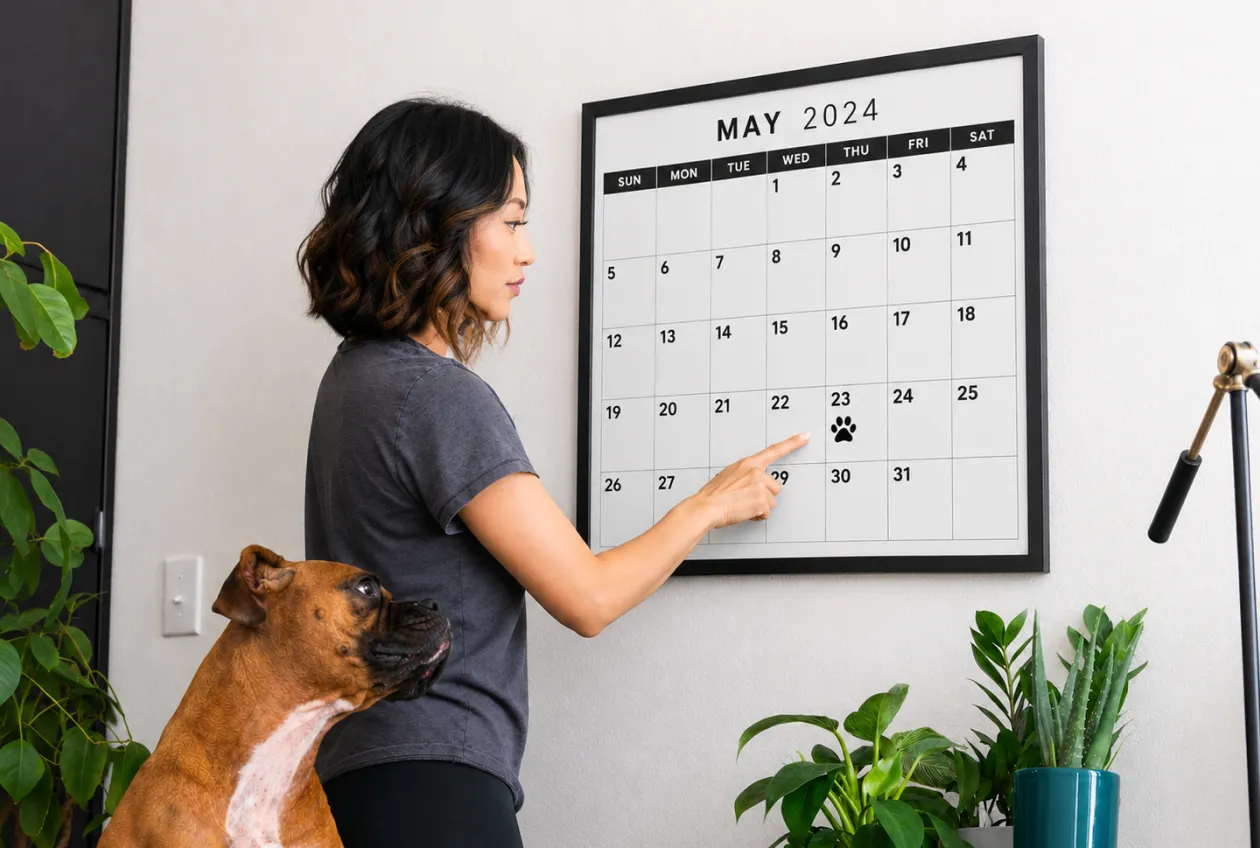
Most female dogs experience their first heat cycle between 6-12 months of age, though this can vary depending on breed size.
- Small breeds may enter heat earlier (around 6 months)
- Medium breeds often experience it between 6-12 months
- Large breeds may start later, sometimes closer to 18 months
Your dog’s first heat marks reproductive maturity, but it does not necessarily mean she is emotionally or physically mature.
How Long Does a Dog Stay in Heat?
Dogs don’t experience a monthly period, like humans do. Their reproductive cycle, commonly referred to as the heat cycle, is much longer than ours.
Their heat cycle can last several weeks, but not every stage lasts the same amount of time. Bleeding lasts around 7-10 days while the complete heat cycle lasts 2- 4 weeks.
Most dogs come into heat twice per year. However, some dogs naturally have longer or shorter cycles.
When Do Dogs Stop Going Into Heat?
Dogs don’t experience menopause like human females, they continue to have heat cycles and the ability to get pregnant into their senior years.
They don’t necessarily have longer gaps between cycles either, although dogs become less fertile, and their heat can become silent.
This means they don’t have vulvar swelling or discharge, but they do still cycle and ovulate.
Signs Your Dog Is in Heat
Knowing the early signs helps you prepare before the cycle fully begins.
Common symptoms include:
- Swollen Vulva
- Light Vaginal Bleeding or Discharge
- Frequent Urination
- Attraction of male dogs
- Behavioral changes like increased clinginess, restlessness, or even aggression toward other dogs.
- Change in appetite
Remember every dog experiences heat differently.
How to Care for a Dog in Heat
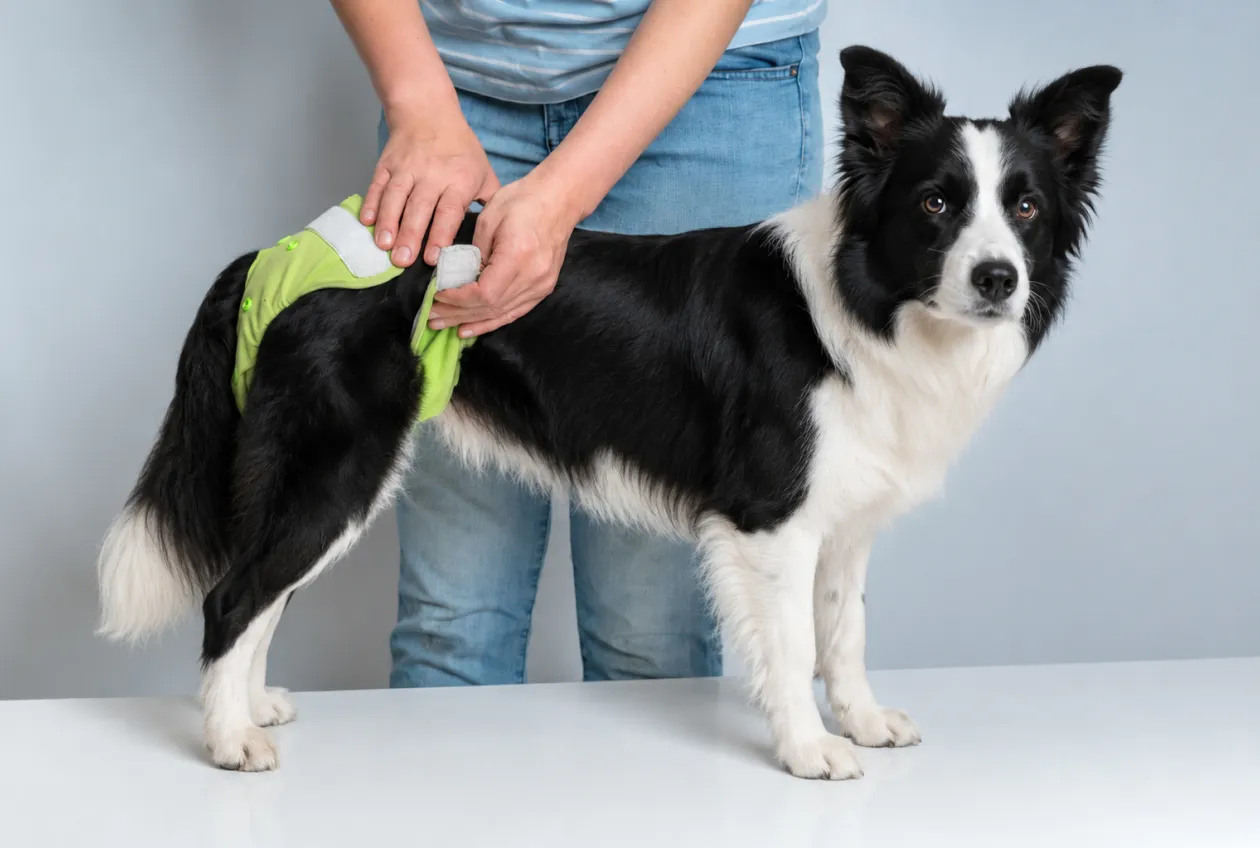
Here are practical ways to make your dog more comfortable:
- Use dog diapers to help manage bleeding
- Maintain Hygiene by gently cleaning discharge when necessary and keep the area dry.
- Provide clean bedding
- Maintain normal routines
- Avoid stressful situations
- Increase Supervision
- Track your dog’s heat cycles
What To Avoid When Your Dog Is In Heat
Dog Parks
Avoid dog parks during heat, as female dogs can attract male dogs from surprisingly long distances, creating stressful or unsafe situations.
Unsupervised Outdoor Time
Always supervise outdoor time, as dogs in heat may behave differently, become distracted more easily, or try to wander away.
Even dogs with excellent recall can behave differently during heat.
Ignoring Unusual Symptoms
Some symptoms during heat may indicate that something more serious is happening.
Contact your veterinarian if you notice severe lethargy, fever, vomiting, or foul-smelling discharge.
Frequently Asked Questions (FAQs)
At what age do female dogs get their first heat?
Most female dogs experience their first heat cycle between 6-12 months of age, although smaller breeds may start earlier and larger breeds may start later.
How often do dogs go into heat?
Most dogs go into heat approximately every 6 months. However, breed, age, and individual differences can affect frequency.
Can I walk my dog while she is in heat?
Yes, but always keep your dog on a leash and avoid crowded areas or dog parks. Dogs in heat may attract male dogs even from long distances.
Is it normal for dogs to eat less during heat?
Yes. Some dogs experience reduced appetite during heat, while others may eat more. If your dog stops eating completely or appears unwell, consult your veterinarian.
Conclusion
Your dog’s first heat cycle may feel overwhelming initially, but understanding what’s normal makes the process much easier. Observe early signs, prepare ahead, and focus on comfort and routine.
written by
Shyama C PrabhuAuthor