
Do Cats Drink Milk? The Truth Behind Milk and Cats' Health
Cats and milk may seem like a classic pair, but most adult cats can’t digest it. Learn the truth, risks, and safe alternatives for your feline.

5 Min Read
01 Sept, 2025
Social share
Or copy link
https://www.happypet.care/media/blogs/parenting/do-cats-drink-milk
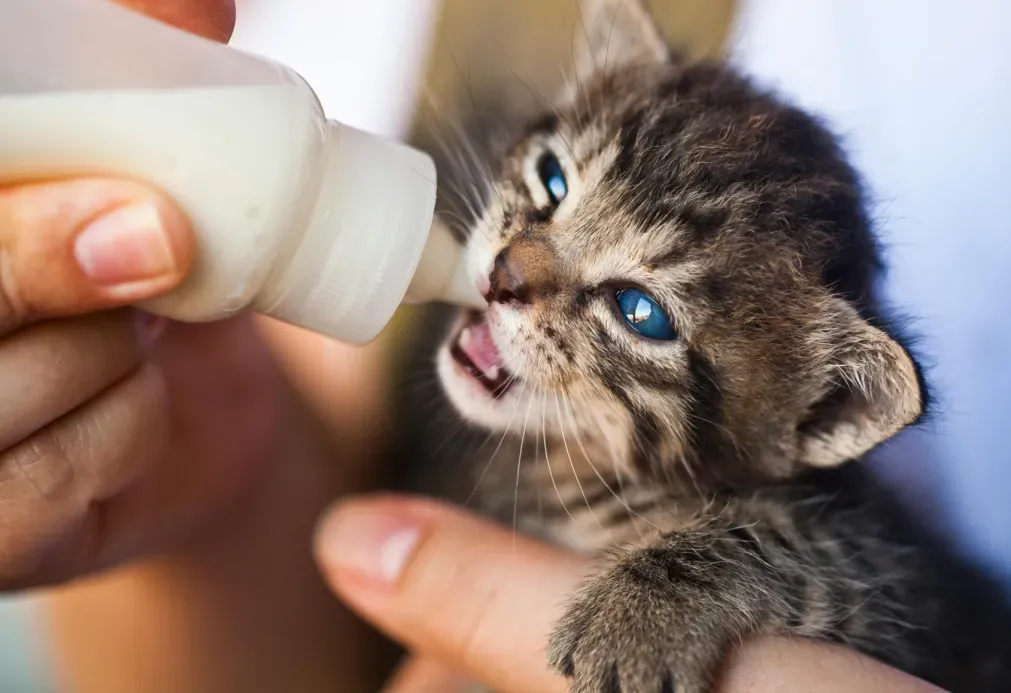
We are all stamped with the fond memory of notorious Tom from Tom & Jerry slurping the bowl of milk. This and many other such instances have naturally sparked the view that a bowl of milk is a cat’s delight. However, our nostalgic snippets lack accuracy suggesting that cats and milk aren’t always the best combination.
On the doubt of whether cats drink milk, we can say that kittens enjoy and thrive on milk but as they grow old they lose the ability to produce lactase which can result in indigestion amongst cats when exposed to milk. Let’s unravel the truth on how do cats drink milk and what are the effects of the same.
Do Cats Drink Milk: Tracing Back the Origin
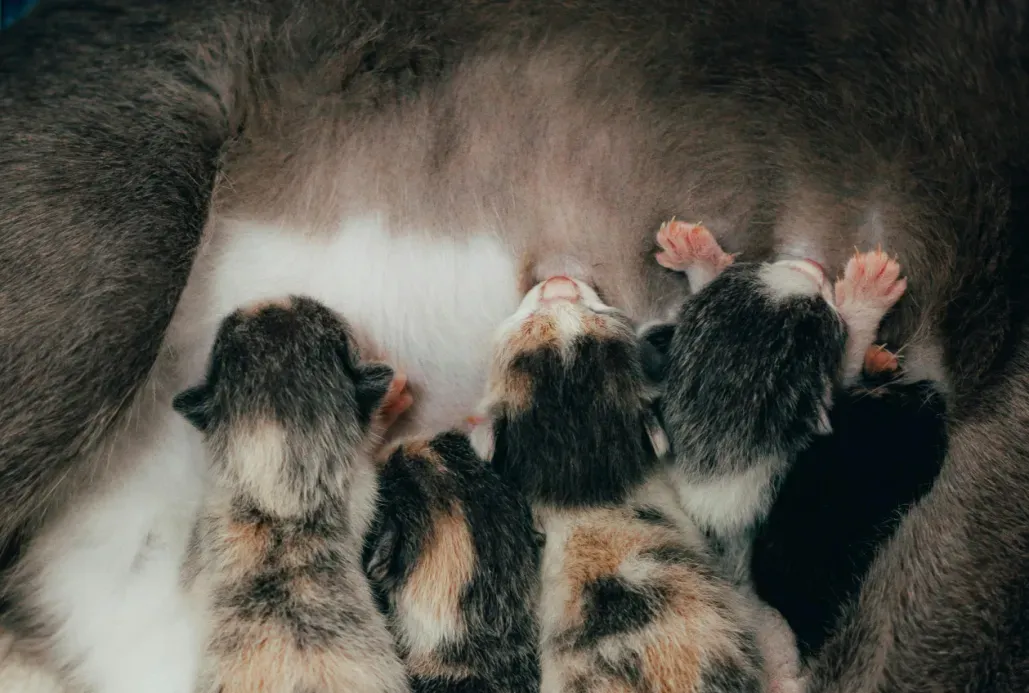
Our belief towards cats' obsession with milk is owed to the consumption of milk by them in their early stage. Like in their human counterparts, the baby canine’s initial source of nutrition is through their mothers’ milk.
The milk provides them with important nutrients like fats, protein or antibodies that cats require to facilitate a healthy growth. This automatically leads to the insinuation that cats can drink milk. However, the real question is until what age do cats drink milk.
Why Do Cats Drink Milk: The Lactose Chapter
To unravel the story on, cats drink milk or not, it is essential to dive deep into the lactose story at first. Lactose is the sugar that is present in the milk and the enzyme that assist in digesting this is called lactase which all mammals possess during the early years that can aid in processing the mother’s milk. As cats grow up, they start to lose the ability to produce lactase, a condition that is commonly called lactose intolerant.
Can Cats Drink Milk: What does the research say?
Now what does the science say on how long do cats drink milk from their mother?
A University of California study (2018) looked at lactose intolerance in 120 adult cats. The research demonstrated that a high percentage, approximately 85%, could not digest lactose effectively.
The findings were a shock to cat owners, as it indicated that lactose intolerance is much more common among adult cats than thought. When milk was fed to the cats, the raw lactose would ferment within their stomachs, leading to discomfort and upset.
In a second 2013 study in the Journal of Animal Science, researchers learned that the failure to produce lactase in adult cats results in diarrhea, bloating, vomiting, and abdominal discomfort.
That research lends credence to the notion that kittens can digest milk but most adults can't, and it isn't merely harmless play to feed them milk. So, do cats drink milk? No and it can considerably lead to indigestion issues in them.
The Effect of Lactose Intolerance in Cats
Now that we have settled the debate on, can cats drink milk, it’s meagre to talk about the effects of exposing them to milk. If you feed your adult cat with milk, you give way to a long thread of digestive issues which is caused because of the indigestion of lactose in them.
Often these issues take their jolly time to show up and when they do, you will realise it significantly affects your cats’ digestive health with diarrhea and bloating being one of the primary ones. Excess of gas, abdominal pain follows suit along with vomiting in some cases that can cause serious dehydration.
Fact Checking with Research Studies
Speaking of, do cats drink milk?
A 2013 study confirmed that in 90% of adult cats, diarrhea and other gastrointestinal problems occur when they are exposed to milk. Cats that were lactose intolerant experienced an upset stomach, while those with a higher tolerance for lactose still exhibited mild discomfort, such as bloating and digestive inefficiencies.
More importantly, those adult cats who have been weaned for long showed worse signs of intolerance as compared to younger adult cats. This begs the question of how many months do cats drink milk? The answer to this is kittens can drink milk until the age of 8 to 10 weeks and after weaning, milk with lactose should be removed from their daily diet. Below mentioned are some of the risks that can occur if your cats drink milk-
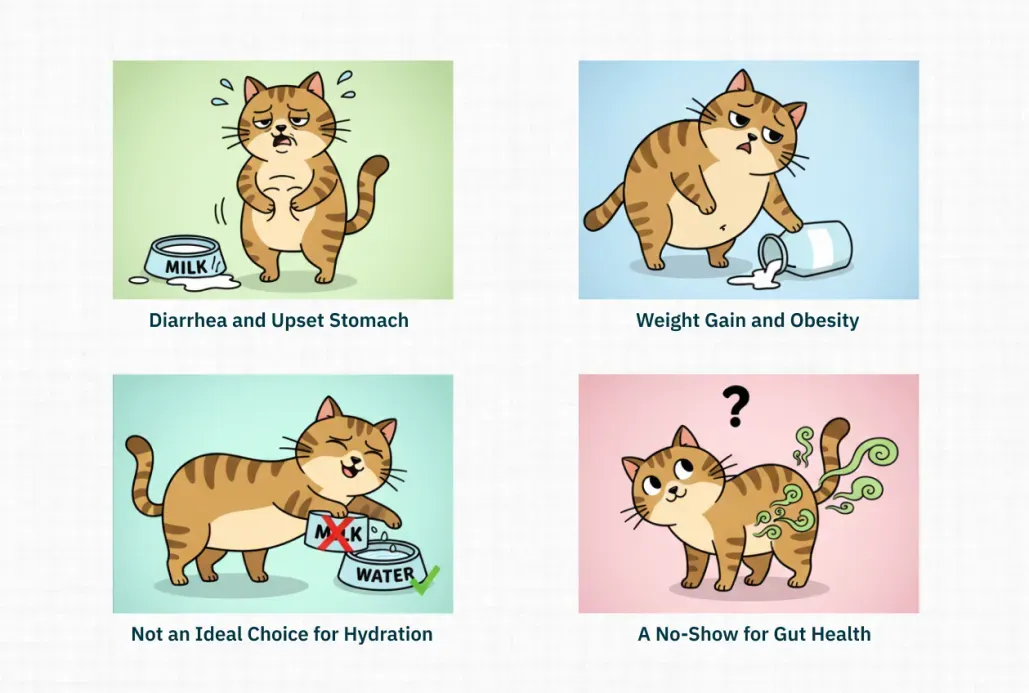
1. Diarrhea and Upset Stomach
As already mentioned, cats are lactose intolerant which is why if they drink milk, they will be left to deal with gastrointestinal issues. The most common issues that cats are exposed to at the consumption of milk is diarrhea which is often coupled with vomiting, stomach cramps, and nausea. If your feline companion is already dealing with digestive issues, this can be further more difficult for them. Now the doubt of whether cats drink milk is pretty succinct.
2. Weight Gain and Obesity
Although a small quantity of milk may not be detrimental, it can lead to unwanted weight gain if fed regularly. Milk contains a lot of fat and calories, which, when consumed regularly, can cause obesity in cats. Obesity in cats can result in many health issues, such as diabetes, joint disease, and a poorer quality of life. Since cats are carnivores by nature, their nutritional requirements ought to be centered on protein-based, low-fat foods and not on calorie-laden, nutrient-depleted treats such as milk.
3. Not an Ideal Choice for Hydration
Cats, as with all animals, require access to clean water for the purpose of hydrating them. Milk must never be used as a replacement for water since it fails to hydrate a cat properly. Lactose-intolerant cats might even get dehydrated should they drink milk regularly because diarrhea and vomiting result in fluid loss. It's always safer to get your cat to drink clean water so they can become hydrated and their body functions remain healthy.
4. Cats and Milk: Beacon for Health Issues
The notion that cats adore and should be given milk is more myth than fact. It has been used in cartoons, films, and folk stories for centuries, but it is not supported by the biology of cats. Providing milk as a treat can not only upset their digestive system but also pose avoidable health threats. By remaining with a well-balanced, species-specific diet, you can do away with the issues related to feeding milk.
5. A No-Show for Gut Health
Consuming milk negatively affects a cat's gut microbiome. The undigested lactose in the intestines causes fermentation that does not only result in gas and bloating but can also disrupt the sensitive balance of good bacteria in the digestive system of the cat. The imbalanced condition, over time, causes more frequent gastrointestinal problems, such as poor nutrient uptake and compromised immunity.
How about Lactose-Free Alternatives?
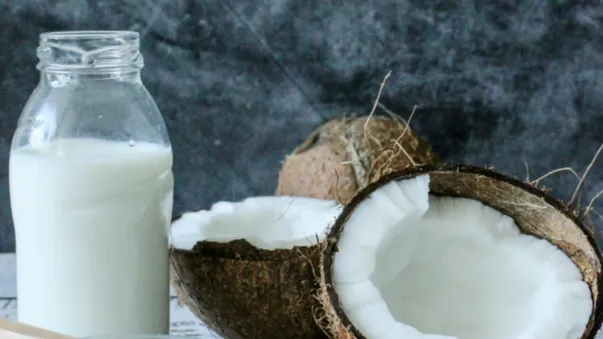
Can cats drink milk? Yes, the ones without lactose in them.
There are multiple brands now that offer lactose-free milk alternatives which you can include in your cats’ diet to let them enjoy milk without the fear of causing any health issues.
These alternatives are often fortified with taurine, a nutrient that can significantly contribute to enhancing your cats’ cardiac health. One interesting alternative could be coconut milk which doesn’t contain lactose and has protein and fats in them that can positively affect your canine buddy' s health. However, it is important to note that the coconut milk should be given only occasionally as they are high in fats.
Conclusion
No, milk should not be consumed by adult cats on a regular basis as they are usually lactose intolerant. If your cats drink milk it can cause unpleasant digestive problems like diarrhea, bloating, and nausea. If you’d wish you can treat them with lactose free milk but only in moderation.
written by
Happy Pet TeamAuthor