Home

/

Fish species

/

Green Spotted Puffer

Green Spotted Puffer

Origin

South East Asia

Habitat Size

50-150 Liters

Water Type

Brackish

Water Temperature

24º-28ºC

Cost in India

₹80 - ₹150

Size

4 - 6 inches (Small)

Diet

Carnivore
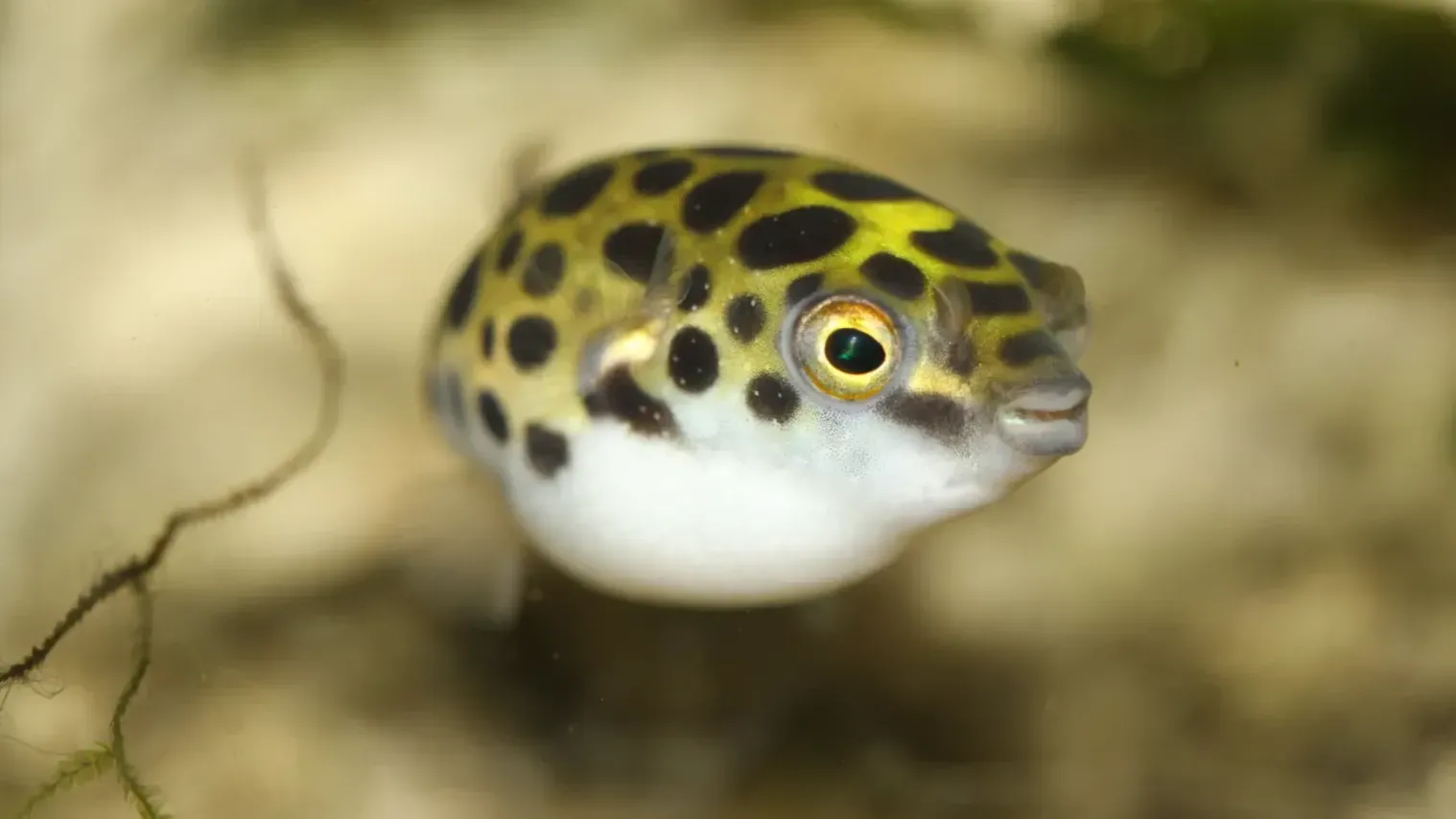
Round fish with yellow spots and white belly swims in a blurry aquarium
written by image

by Happy Pet TeamUpdated on 2 Dec 2025

The Green Spotted Puffer (scientific name Dichotomyctere nigroviridis) is a small, round fish with bright green-yellow skin and many dark spots. Kids love them because they look like tiny spotted balloons and make funny faces. They are popular in aquariums but are special — they do best in brackish water (a mix of fresh and salt) and need caring owners.

Green Spotted Puffer Origin

Natural home: coastal rivers, estuaries, and mangrove areas of South and Southeast Asia, such as:

  1. India
  2. Thailand
  3. Malaysia
  4. Philippines and nearby

Temperament

  1. Usually solitary and curious
  2. Can become aggressive or bossy with other fish, especially as they grow
  3. Best kept alone or in a species-only tank

Green Spotted Puffer Compatibility

  1. Best with their own kind if tanks are large and fish are the same size and introduced together
  2. Avoid small, slow, long-finned, or timid fish (they may nip fins or eat them)
  3. Also, avoid slow bottom dwellers

Green Spotted Puffer Price Range

  1. Small juveniles often sell around ₹500–₹2,500 depending on size, source, and rarity

Characteristics

Temperament

Aggressive

Friendly

Compatibility with other fishes

Not Friendly

Super Friendly

Habitat Size

Small

Large

about image

Green Spotted Puffer Habitat Requirements

Initial Setup Cost

₹4,000 - ₹12,000

Water Temperature

24º -28ºC

Water Type

Brackish

PH Level

7.5 - 8.5

Green Spotted Puffer Tank Type

  1. Brackish water (start freshwater when very young, move to brackish as they grow; many keepers keep them at stable brackish salinity).

Aquarium Size

  1. Minimum recommended 100 liters (≈25–30 US gallons) for a single adult; bigger is better because they are active swimmers.

Green Spotted Puffer Water Conditions

  1. Temperature: 24–28°C (75–82°F)
  2. pH: 7.2–8.2 (slightly alkaline)
  3. Salinity / SG: Low brackish ~1.005–1.026 (many hobbyists aim around 1.005–1.020 as the fish matures; use marine salt and a hydrometer)

Environment Needs

  1. Use crushed coral or aragonite substrate to help keep pH stable
  2. Provide rockwork, caves, and hiding spots, plus open swimming areas
  3. Plants (hardy brackish plants or faux plants) can be added, but keep sturdy decorations — puffers love to explore and sometimes rearrange the tank

Essential Equipment

Aquarium tank

Water filter

Heater

Light

Substrate

Green Spotted Puffer Nutritional Guide

Avg Monthly Expenses

₹80 - ₹ 150

Green Spotted Puffer Diet Type

  1. Carnivore (meat eater)

Suitable Foods

  1. Live or frozen snails (very important)
  2. Shell-on shrimp
  3. Mussels
  4. Crab legs
  5. Earthworms
  6. Meaty frozen foods

Commercial marine pellets can be offered, but must be supplemented with hard foods to wear down their teeth (beak)

Green Spotted Puffer Feeding Frequency & Tips

  1. Feed once or twice daily, in small portions they finish in a few minutes.
  2. Give hard-shelled foods (snails, crab) often — puffers’ teeth grow continuously, and these foods help keep teeth trimmed. Remove uneaten food to keep water clean.
about image

Green Spotted Puffer Health & Care

Common Health Issues

Fin rot

Pop eye (swollen eyes)

White spot / ick

Columnaris (cotton wool-like growth on the skin)

Parasites

Swim bladder disease

Signs of good health

Active

Bright coloration

Good apetite

Signs of sickness

Loss of appetite

Lethargic behaviour

Dull coloring

Tattered fins

Swimming abnormally

Just like humans, Green Spotted Puffers also need proper care and a clean home to stay happy and healthy. Keeping their tank neat and giving them the right food can prevent most problems.

Ich (White Spot Disease)

Ich is caused by tiny parasites that make white dots on the skin and fins. A puffer may scratch on objects, breathe fast, or stop eating. Treatment usually involves raising the water temperature slightly and using medications made for brackish/saltwater ich (follow product instructions). Because Green Spotted Puffers need brackish water, use ich treatments that are safe at that salinity, and always isolate sick fish when possible.

Mouth/Beak Overgrowth (Malocclusion)

If a puffer doesn’t get enough hard foods, its beak (teeth) can overgrow. Signs are trouble eating or picking at food. Hobbyists carefully trim a puffer’s beak (by a vet or experienced keeper) and then feed snails, shell-on shrimp, and crunchy foods regularly so teeth wear down naturally. Prevention is better than cure — feed shell foods often.

Poor Water Quality / Nitrate Stress

High ammonia, nitrite, or nitrate levels cause sluggishness, poor appetite, and skin problems. Puffers are sensitive to dirty water. Regular water changes, strong filtration, and testing water often prevent stress-related sickness. If water quality is bad, do partial water changes and check parameters before treating other problems.

Green Spotted Puffer General Health Tips

  1. Keep water stable (salinity, pH, and temperature)
  2. Do weekly or fortnightly partial water changes (amount depends on tank size and bioload)
  3. Feed snails and shell foods regularly to prevent beak issues
  4. Quarantine new fish and plants before adding to the main tank
  5. Use a good filter and remove uneaten food quickly

Prerequisites for a Fish

Cleanliness

Adequate tank space

Effort & commitment

Enriching Environment

written by image

Written by

Happy Pet Team

Author

Team Happy Pet is a passionate collective of pet experts, enthusiasts, and advocates dedicated to sharing trusted and insightful content.

Our cont
 

Frequently Asked Questions

Can Green Spotted Puffers live with other fish?

They are aggressive and territorial, so they are best kept in species-only tanks or with other fish that can tolerate their temperament.

What do Green Spotted Puffers eat?

Their diet consists of hard-shelled foods like snails and crustaceans, as well as live or frozen foods such as bloodworms and shrimp.

Do Green Spotted Puffers require a lot of maintenance?

Yes, they require high maintenance, including regular water changes and careful monitoring of water parameters.