
Home
/
Fish species
/
Black Ghost Knifefish
Origin
South America
Habitat Size
400-600 Liters
Water Type
Fresh Water
Water Temperature
23º-28ºC
Cost in India
₹300 - ₹500
Size
18 - 20 inches (Large)
Diet
Carnivore

by Happy Pet TeamUpdated on 2 Dec 2025
Black Ghost Knifefish Fish Guide
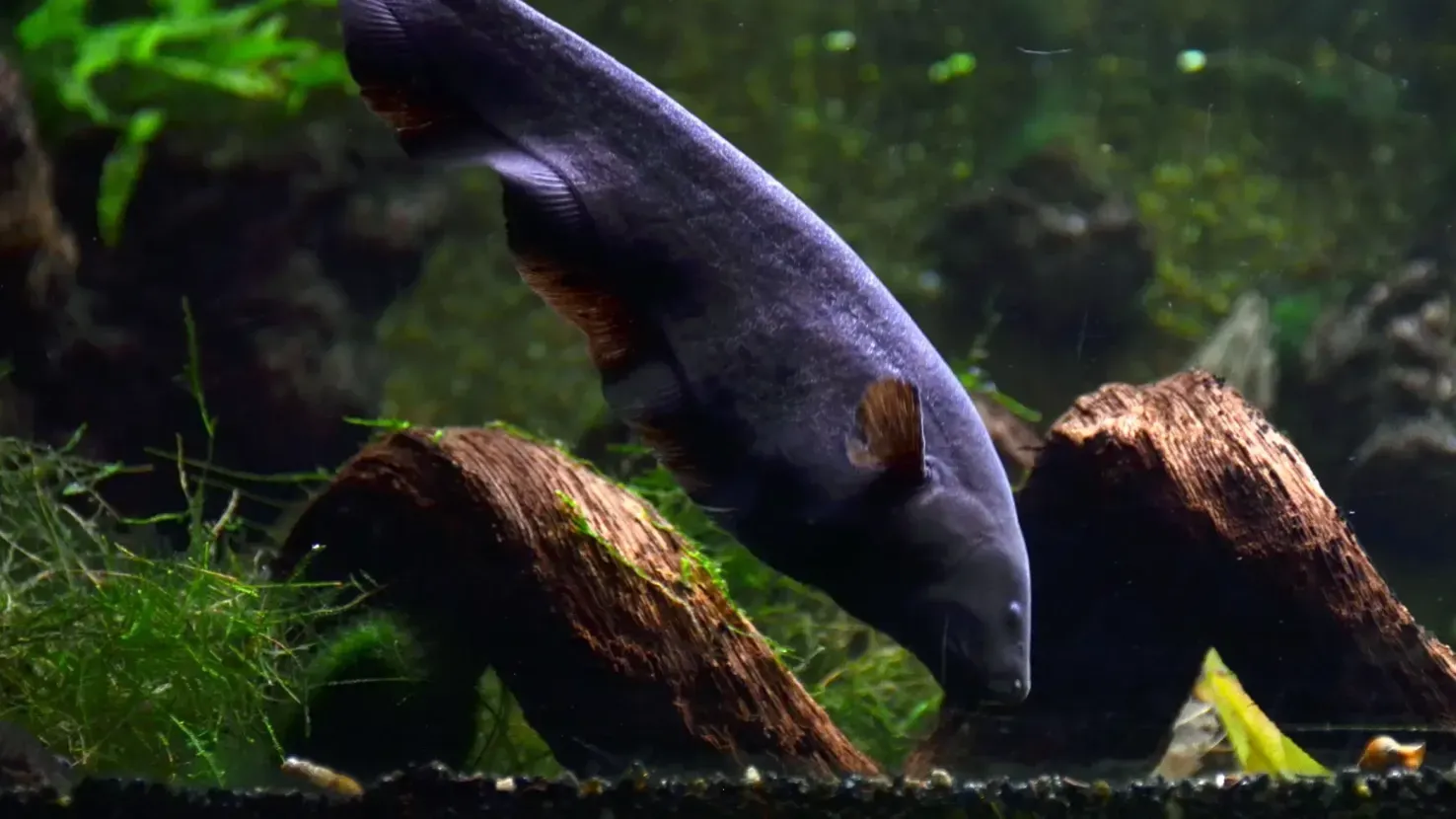
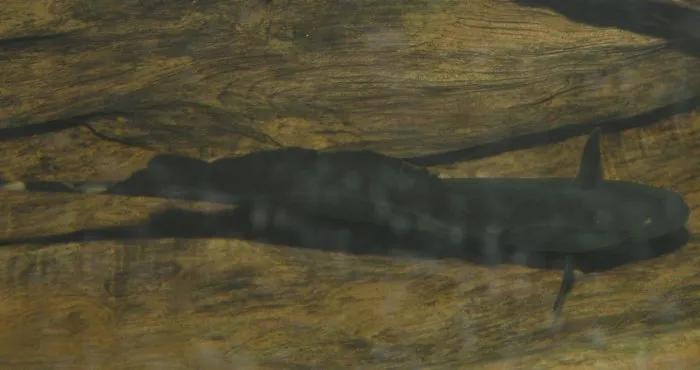
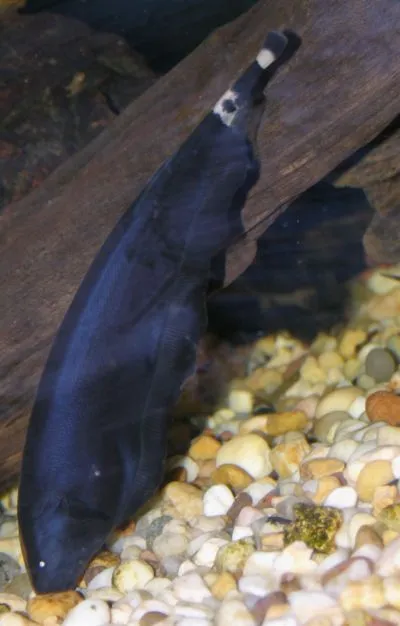
The Black Ghost Knifefish (Apteronotus albifrons) is one of the most fascinating freshwater fish you can keep in an aquarium. Its long, ribbon-like body moves gracefully through the water, almost like it’s floating. This fish is deep black with a touch of white on its tail and has no visible scales — giving it a silky, ghost-like appearance. What makes it even more special is how it uses weak electric signals to sense its surroundings and communicate, especially in dark water. Because of its mysterious look and calm nature, many aquarists love keeping this elegant fish as the highlight of their tanks.
Origin
- Comes from rivers in South America (mainly the Amazon area)
- It lives in slow, dark waters with lots of plants and wood
Black Ghost Knifefish Temperament
- Mostly noisy (electrical) but peaceful — it uses weak electric signals to “talk” and find food.
- Generally shy and likes calm, low-light places.
Compatibility
- Good with calm, medium-to-large fish that won’t nip at its long body (for example, some tetras, angelfish, larger gouramis).
- Avoid small fish that may eat, very aggressive cichlids, or fish that chase and stress it.
Black Ghost Knifefish Price in India
- Small young fish can be cheap in local stores; expect roughly ₹300 – ₹2,500 depending on size and seller. Prices vary a lot by city and size.
Characteristics
Temperament
Aggressive
Friendly
Compatibility with other fishes
Not Friendly
Super Friendly
Habitat Size
Small
Large


Black Ghost Knifefish Habitat Requirements
Initial Setup Cost
₹30,000 - ₹80,000
Water Temperature
23º -28ºC
Water Type
Fresh Water
PH Level
6 - 7.5
Tank type
Black Ghost Knifefish Aquarium size
- Minimum for a growing fish: 30–40 US gal (big tanks are best)
- Adults do much better in 120+ gallons because they can reach 35–45 cm (14–18 in)
Water conditions
- Temperature: 24–28°C (75–82°F).
- pH: around 6.8–7.8 (slightly acidic to neutral is OK).
- Hardness: 5° (90 ppm) soft to moderately hard water; keep it stable.
Black Ghost Knifefish Environment needs
Essential Equipment
Aquarium tank
Water filter
Heater
Light
Substrate
Black Ghost Knifefish Nutritional Guide
Avg Monthly Expenses
₹300 - ₹ 500
Black Ghost Knifefish Diet type

- Carnivore/insectivore — they prefer animal proteins.
Suitable foods
- Live or frozen foods:
- Bloodworms
- Brine shrimp
- Small prawns
- Sinking carnivore pellets
- Frozen meaty foods
- They may ignore flakes
Black Ghost Knifefish Feeding frequency & tips
- Feed once or twice a day small portions they finish within a few minutes
- Offer variety (pellets + frozen/live) so they get all nutrients
- If other fish eat faster, feed the knifefish separately or use sinking foods, and it can reach

Black Ghost Knifefish Health & Care
Common Health Issues
Fin rot
White spot / ick
Velvet disease (yellowish-brown spots on the skin)
Columnaris (cotton wool-like growth on the skin)
Bacterial infections
Parasitic infections
Signs of good health
Active
Good apetite
Bright coloration
Signs of sickness
Loss of appetite
Lethargic behaviour
Dull coloring
Swimming abnormally
White growths
The Black Ghost Knifefish is sensitive and needs clean, stable water to stay healthy. If its environment changes too quickly or gets dirty, it can easily fall sick. Here are some common problems to watch out for and how to handle them.
Bacterial skin infections/ulcers
Bacteria enter the fish from small abrasions. This can cause red sores and skin ulcers. Fish may rub their bodies against objects, change color, or expose areas of their skin due to inferior water quality. Treatment is improving water quality, performing partial water changes, isolating the affected fish if possible, and using aquarium antibiotics as recommended by a veterinarian or local fish store. Prevention is through good aquarium hygiene.
Parasites
Signs of dwelling parasite infections include scratching, clamped fins, white specks on the skin, or breathing difficulties. Since knifefish are reclusive, they may also hide and refuse to eat. Typically, to treat involves warming up gently if that does not harm all tankmates, to bathe sensitive species in medication, or to use antiparasitics on them, and to keep the water very clean. Follow with care the medicine's instructions and consult with a vet or aquatic specialist if fish fail to improve.
Malnutrition/weight loss
If the fish is kept with faster eaters or only given flakes, it can become thin and weak. Signs are a sunken belly, low energy, and slow growth. Fix by offering protein-rich frozen or live foods, feeding alone so it gets food, and checking water quality. A varied diet prevents long-term problems.
Black Ghost Knifefish General health tips
- Replace 20 to 30% of the water each week or filter enough water.
- Regularly monitor levels of temperature, pH, ammonia, nitrite, and nitrate.
- Provide hiding places for the reduction of stress and also low light.
- Quarantine new fish before introducing them into the main tank area.
- Give a diverse, high-protein diet and watch for changes in behavior or color.
Prerequisites for a Fish
Adequate tank space
Cleanliness
Effort & commitment
Enriching Environment

Written by
Happy Pet TeamAuthor
Team Happy Pet is a passionate collective of pet experts, enthusiasts, and advocates dedicated to sharing trusted and insightful content.
Our cont
Frequently Asked Questions
Are Black Ghost Knifefish suitable for beginners?
They are best suited for intermediate aquarists due to their specific care requirements and large size.
What do Black Ghost Knifefish eat?
They are carnivores and should be fed a variety of live or frozen foods such as bloodworms, brine shrimp, and small feeder fish.
How do Black Ghost Knifefish navigate their environment?
They use electrical impulses to navigate and communicate, which is particularly useful in the dark, murky waters of their natural habitat.