Home

/

Fish species

/

Banggai Cardinalfish

Banggai Cardinalfish

Origin

🇮🇩

Indonesia

Habitat Size

50-150 Liters

Water Type

Salt Water

Water Temperature

25º-28ºC

Cost in India

₹80 - ₹150

Size

2 - 3 inches (Small)

Diet

Carnivore
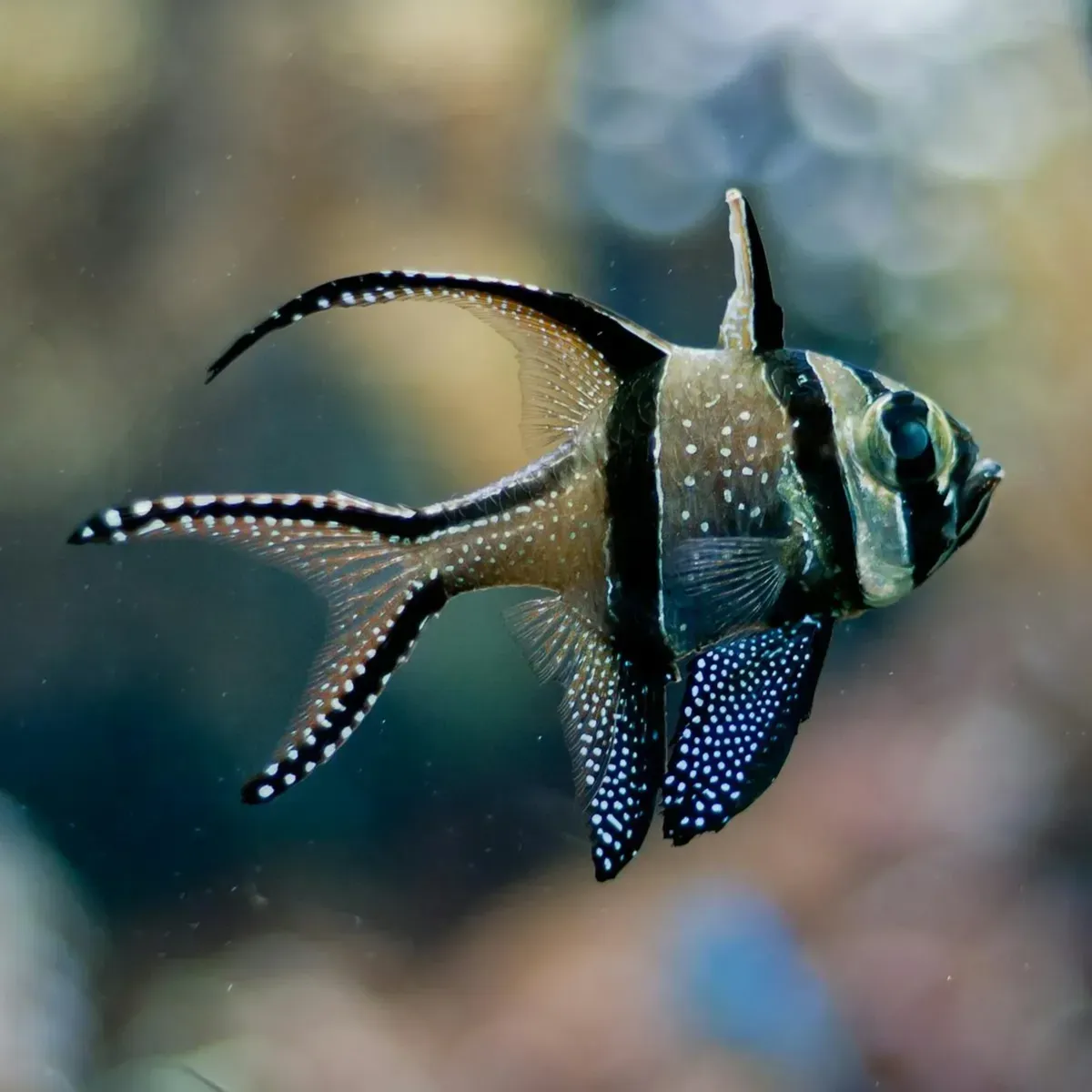
Banggai Cardinalfish with black stripes white spots and elongated fins swimming
written by image

by Happy Pet TeamUpdated on 2 Dec 2025

The Banggai Cardinalfish (Pterapogon kauderni) is a small, striking marine fish with long fins, black bars, and white spots that make it look like a tiny, floating flag. It is very popular with hobbyists because it is calm, easy to breed in tanks, and looks special next to corals and sea urchins. Sadly, wild populations are small and the species is listed as endangered, so many shops now sell captive-bred fish.

Origin

  1. Native to the Banggai Islands (Indonesia)
  2. Its natural home is small shallow bays with seagrass, corals, and long-spined sea urchins.

Banggai Cardinalfish Temperament

  1. Mostly peaceful to semi-aggressive
  2. Valm with other peaceful fish, but can defend small territories and sometimes nip the fins of similar small species.

Compatibility

  1. Good with peaceful reef fish, even other cardinalfish species.
  2. Avoid very big or highly aggressive predators and large, fast hunters.
  3. Also, be cautious when keeping many Banggai together in very small tanks; they form groups but can fight if crowded.

Banggai Cardinalfish Price in India

  1. Captive-bred individuals are common and affordable
  2. Typical Indian market price: ₹1,200 – ₹3,500 per fish, depending on size and breeder (wild-caught or captive-bred, availability)

Characteristics

Temperament

Aggressive

Friendly

Compatibility with other fishes

Not Friendly

Super Friendly

Habitat Size

Small

Large

about image

Banggai Cardinalfish Habitat requirements

Initial Setup Cost

₹4,000 - ₹12,000

Water Temperature

25º -28ºC

Water Type

Salt Water

PH Level

8.1 - 8.4

Banggai Cardinalfish Tank type

  1. Marine (saltwater) reef/lagoon aquarium
  2. Reef-safe if corals/urchins are present

Aquarium size

  1. Minimum 90 liters / 25–30 gallons for a small group or pair; larger is better for groups.

Banggai Cardinalfish Water Conditions

  1. Temperature: 25–28°C (75–82°F)
  2. pH: 8.2–8.4
  3. Salinity / specific gravity: ~1.020–1.025
  4. Hardness: typical marine dKH 8–12

Environment needs

  1. Provide hiding spots: live rock, branching corals, and places to hover near urchin spines or seagrass
  2. Gentle water flow and moderate lighting suit them well
  3. They like spots to “rest” in groups

Essential Equipment

Aquarium tank

Water filter

Heater

Light

Substrate

Banggai Cardinalfish Nutritional Guide

Avg Monthly Expenses

₹80 - ₹ 150

Banggai Cardinalfish Diet type

  1. Carnivore / micropredator (feeds mainly on small zooplankton and meaty foods)

Suitable foods

  1. High-quality marine pellets
  2. Frozen mysis shrimp
  3. Brine shrimp
  4. Finely chopped seafood
  5. Small live foods
  6. Offer variety to keep them healthy

Banggai Cardinalfish Feeding frequency & tips

  1. Feed small amounts 3 times daily
  2. Give only what they finish in a few minutes
  3. Young fish may benefit from slightly more frequent small feedings
  4. Rotate foods for nutrition and appetite
about image

Banggai Cardinalfish Health & care

Common Health Issues

Fin rot

White spot / ick

Velvet disease (yellowish-brown spots on the skin)

Bacterial infections

Parasites

Fungal infections

Signs of good health

Active

Bright coloration

Good apetite

Signs of sickness

Lethargic behaviour

Loss of appetite

Dull coloring

White growths

Swimming abnormally

Banggai Cardinalfish generally do well inside aquaria if provided with clean water and stable water conditions, good food, and a hiding place. As with all marine fish, they get diseases if the water quality is not maintained or they are stressed. Common diseases include:

Iridovirus (Viral disease)

Iridoviruses have been observed within Banggai populations, resulting in fast and high levels of mortality. Signs include lethargy, loss of appetite, pale areas, or instantaneous death without external marks. Antibiotics do not treat viruses; therefore, good prevention prevents. Buy captive bred fish if possible, and quarantine new arrivals for some weeks. Also, it is important for people to maintain high water quality, and people should avoid overstocking of fish. Isolate the fish and contact a marine veterinarian if a virus is suspected. Supportive care with good tank hygiene is all that is needed.

Marine Ich (Cryptocaryon) and external parasites

Marine ich, characterized by tiny white spots, flashing (rubbing), clenched fins, and labored breathing, is due to a parasite. Treatment involves short-term freshwater dips, copper medications, or a mixture of formalin and copper (marine medications) in accordance with package instructions. Quarantine new arrivals. Early treatment, if offered, works best.

Bacterial infections (open sores, fin rot)

Bacterial problems often follow poor water or small injuries. Look for red sores, frayed fins, or white patches. Treat with improved water quality, antibacterial marine meds, and remove stressors. Treating the whole tank may be needed if many fish are sick; again, quarantine helps prevent the spread.

Banggai Cardinalfish General health tips

  1. Quarantine every new fish for 2–4 weeks.
  2. Maintain stable water parameters via regular testing.
  3. Purchase animals bred in captivity when it can be done. Captive-bred animals are healthier. Buying them aids wild populations.
  4. Avoid overcrowding through the provision of hiding spots.
  5. Note early indications like reduced appetite, concealment, or bright displays, so you can respond without delay.

Prerequisites for a Fish

Cleanliness

Effort & commitment

Enriching Environment

Adequate tank space

written by image

Written by

Happy Pet Team

Author

Team Happy Pet is a passionate collective of pet experts, enthusiasts, and advocates dedicated to sharing trusted and insightful content.

Our cont
 

Frequently Asked Questions

What do Banggai Cardinalfish eat?

They are carnivores and should be fed a variety of small meaty foods such as brine shrimp, mysis shrimp, and finely chopped seafood.

What are common health issues for Banggai Cardinalfish?

They can be susceptible to fin rot, white spot disease (Ich), velvet disease, bacterial infections, parasites, and fungal infections.

How do Banggai Cardinalfish reproduce?

They are mouthbrooders. Males carry the eggs in their mouths until they hatch, protecting them during the incubation period.